


Vehicle Maintenance Checklist 2025: Essential Guide for All Drivers
Car troubles rank among the top causes for unexpected expenses, yet drivers who follow a maintenance routine are far less likely to face breakdowns. Here is something people rarely discuss. A simple walk-around inspection takes less than two minutes but could save you hundreds in repair costs and prevent roadside emergencies. Most drivers only act after something goes wrong, but those who keep up with regular checks unlock both peace of mind and better value for their vehicle later on.
Table of Contents
Quick Summary
Daily and Weekly Vehicle Checks Made Simple
Regular vehicle maintenance is the cornerstone of safe and reliable driving. By implementing a consistent routine of daily and weekly checks, drivers can prevent unexpected breakdowns, extend their vehicle’s lifespan, and ensure optimal performance.
Essential Daily Vehicle Inspections
Before starting your journey, a quick yet comprehensive vehicle check can save you from potential roadside emergencies. According to the UK Health and Safety Executive, drivers should perform critical safety checks at the start of every shift.
Start with a visual walk-around inspection. Check your tyres for obvious signs of damage or low pressure. Look for any fluid leaks underneath the vehicle. Inspect windscreen and windows for cracks or chips that might compromise visibility. The Highway Code mandates that lights, indicators, and number plates must be clean and clearly visible.
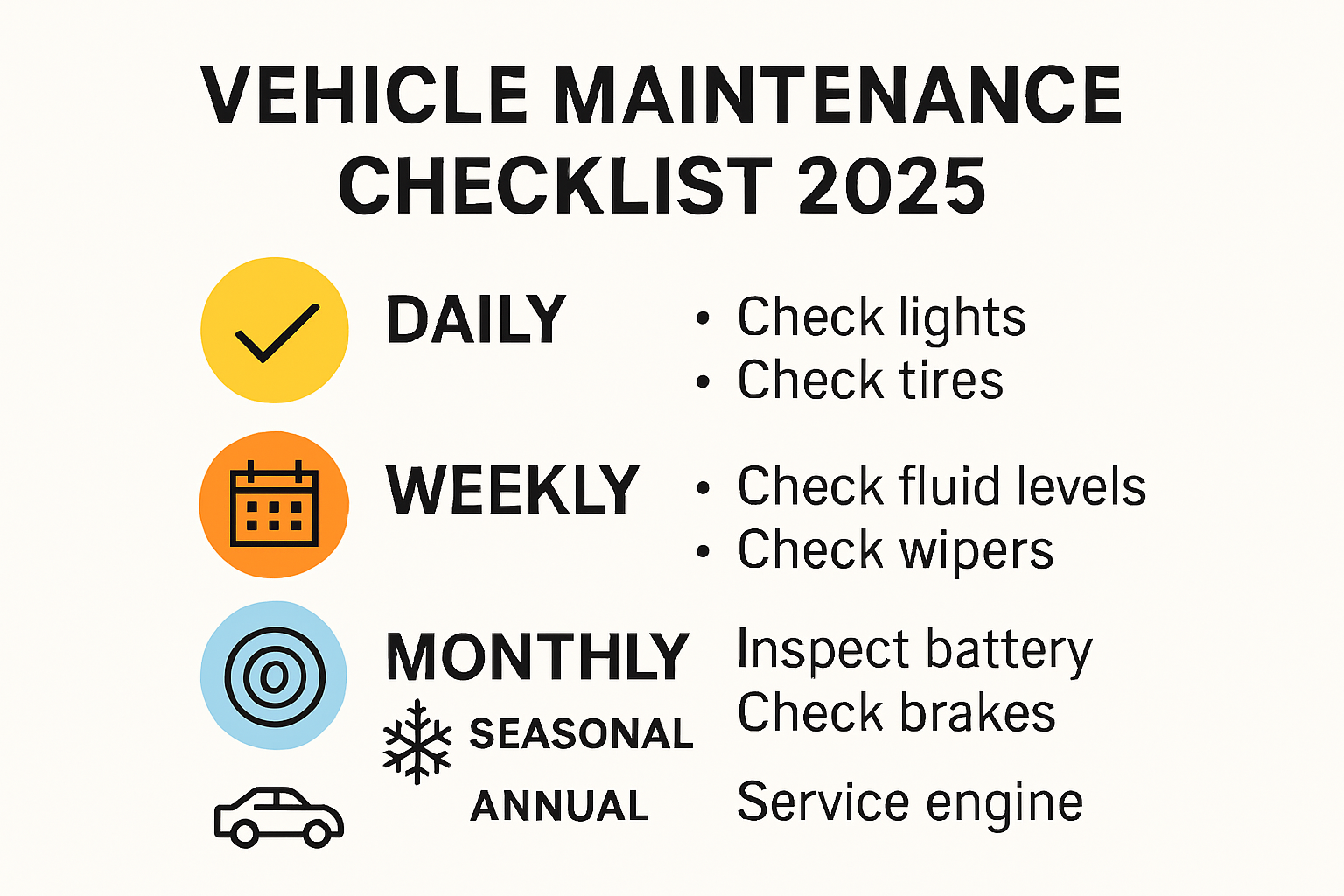
Verify your lights are functioning correctly. This includes headlights, brake lights, indicators, and reverse lights. A quick test takes less than two minutes but can prevent potential accidents and legal complications. If you’re unsure about your vehicle’s diagnostic needs, our comprehensive car diagnostic check guide provides detailed insights.

Weekly Maintenance Routine
Weekly checks dive deeper into your vehicle’s health. Begin by checking tyre pressure and tread depth. The Driver and Vehicle Standards Agency (DVSA) emphasizes the critical nature of proper tyre maintenance for road safety.
Monitor fluid levels meticulously. This includes engine oil, coolant, brake fluid, power steering fluid, and windscreen washer fluid. Low fluid levels can cause significant mechanical issues if left unchecked. Top up fluids as needed and look for any unusual colour changes or signs of contamination.
Inspect your battery connections for corrosion and ensure they are tight and clean. Check the battery’s overall condition and look for any signs of wear. Listen for unusual sounds when starting the engine, which might indicate emerging electrical or mechanical problems.
Smart Maintenance Tips
Create a simple checklist and keep it in your vehicle. Digital or physical, this list will help you track your maintenance routine consistently. Consider using smartphone apps or setting regular reminders to help you stay on top of your vehicle’s health.
Remember that these checks are not just about preventing breakdowns. They’re about ensuring your safety, protecting your investment, and maintaining your vehicle’s performance. A few minutes of inspection can potentially save you hundreds in repair costs and prevent dangerous situations on the road.
Don’t hesitate to seek professional advice if you’re uncertain about any aspect of your vehicle’s condition. Regular professional inspections complement these daily and weekly checks, providing a comprehensive approach to vehicle maintenance.
To help streamline your routine, here’s a checklist table summarising essential daily and weekly vehicle inspections that every driver should perform:
Monthly and Seasonal Car Maintenance Tasks
Vehicle maintenance is not a one-size-fits-all approach. Different seasons and monthly intervals demand specific attention to keep your car running smoothly and efficiently. Understanding these nuanced maintenance requirements can significantly extend your vehicle’s lifespan and prevent costly repairs.
Critical Monthly Maintenance Checks
Monthly vehicle checks go beyond the basic daily and weekly inspections. According to nidirect.gov.uk, regularly monitoring fluid levels is crucial for maintaining vehicle performance and safety. Start by thoroughly checking engine oil, coolant, brake fluid, power steering fluid, and transmission fluid levels.
Inspect your vehicle’s air filter. A clean air filter improves fuel efficiency and engine performance. Look for signs of dirt, debris, or excessive wear. If the filter appears clogged or damaged, consider replacement. Additionally, examine your battery terminals for corrosion and ensure connections remain tight and clean.
Check your windscreen wipers for wear and tear. British weather can be unpredictable, and effective wipers are essential for clear visibility. Replace wiper blades if they show signs of cracking, splitting, or reduced effectiveness. Service4Service recommends thorough cleaning to remove accumulated road grime that can impact wiper performance.
Seasonal Maintenance Strategies
Each season presents unique challenges for vehicle maintenance. In spring, focus on thoroughly cleaning your vehicle to remove winter road salt and grime that can cause corrosion. Inspect your tyres for winter damage and check wheel alignment. Consider our comprehensive guide on annual car servicing to understand the deeper maintenance requirements.
Summer demands attention to your vehicle’s cooling system. Check coolant levels and inspect the radiator for leaks. Ensure your air conditioning system functions correctly. Extreme heat can strain your vehicle’s systems, so preventative maintenance is key. Verify your tyre pressure more frequently, as heat can cause tyre pressure fluctuations.
Autumn preparation involves checking your heating system and defrosting mechanisms. Inspect your battery, as colder temperatures can reduce battery performance. Consider switching to winter-grade oil if recommended for your vehicle type. Check your antifreeze concentration to prevent freezing during winter months.
Winter maintenance focuses on protecting your vehicle from harsh conditions. Check your tyre tread depth and consider winter tyres for improved traction. Ensure your battery is in excellent condition, as cold weather significantly impacts battery performance. Keep your fuel tank at least half full to prevent fuel line freezing.
Smart Maintenance Recommendations
Document your maintenance activities. Create a log or use a smartphone app to track your vehicle’s maintenance history. This helps you stay organised and can be valuable for future servicing or potential vehicle sale.
Remember that while these guidelines provide a solid framework, always consult your vehicle’s manual for manufacturer-specific recommendations. Professional servicing remains an essential component of comprehensive vehicle care.
Prevention is always more cost-effective than repair. By dedicating time to monthly and seasonal maintenance, you protect your investment, ensure safety, and maintain your vehicle’s optimal performance throughout the year.
To clarify how maintenance needs vary through the year, here is a table outlining key tasks for each season:
Yearly Checklist for Long-Term Car Health
Long-term vehicle health requires a comprehensive annual approach that goes beyond routine monthly maintenance. A systematic yearly checklist helps identify potential issues early, prevent unexpected breakdowns, and maintain your vehicle’s overall performance and value.
Comprehensive Annual Vehicle Inspection

An annual vehicle inspection is critical for understanding your car’s overall condition. According to the UK Health and Safety Executive, a preventive maintenance program should be conducted at predetermined intervals of time or mileage, strictly following manufacturers’ instructions.
Start with a thorough professional diagnostic check. Modern vehicles have complex electronic systems that require specialized diagnostic tools. Our comprehensive annual servicing guide provides insights into the comprehensive checks needed to maintain your vehicle’s health.
Carefully inspect your vehicle’s major systems. This includes a comprehensive brake system evaluation, suspension check, and steering component assessment. Look for signs of wear, corrosion, or potential future issues. The Highway Code emphasizes the importance of maintaining all vehicle components in good working condition.
Critical System and Component Evaluations
Tyre maintenance remains paramount. Beyond monthly checks, an annual comprehensive tyre assessment is crucial. Examine tread depth, check for uneven wear patterns, and assess overall tyre condition. The Health and Safety Executive recommends detailed tyre inspections, noting that proper tyre maintenance is essential for vehicle safety.
Evaluate your vehicle’s timing belt or chain. These critical components have specific replacement intervals that vary by make and model. Consult your vehicle’s manual or a professional mechanic to determine the appropriate replacement schedule. Failing to replace these at recommended intervals can lead to catastrophic engine damage.
Conduct a comprehensive fluid system review. This goes beyond topping up fluids. Have professionals flush and replace transmission fluid, brake fluid, and coolant. Check for any signs of contamination or degradation that might indicate underlying mechanical issues.
Long-Term Maintenance Strategies
Document your vehicle’s entire maintenance history. Create a detailed log that tracks every service, repair, and component replacement. This documentation serves multiple purposes: it helps you track your vehicle’s health, provides valuable information for future maintenance, and can increase your vehicle’s resale value.
Consider your driving habits and environment. Vehicles in urban areas with frequent stop-start traffic might require more frequent maintenance compared to those used primarily on motorways. Adjust your maintenance schedule accordingly.
Invest in professional servicing at least once a year. While self-checks are valuable, a professional mechanic can identify issues that might not be apparent to an untrained eye. They can provide a comprehensive assessment of your vehicle’s condition and recommend preventative measures.
Remember that consistent, proactive maintenance is far more cost-effective than reactive repairs. By dedicating time and resources to annual vehicle health checks, you protect your investment, ensure safety, and potentially extend your vehicle’s operational life by several years.
Ultimately, treating your vehicle’s annual maintenance as a crucial investment rather than an optional expense will save you money, prevent unexpected breakdowns, and provide peace of mind on the road.
Expert Tips Tailored for Every Driver

Vehicle maintenance is not a one-size-fits-all approach. Different drivers have unique needs based on their driving habits, vehicle type, and personal circumstances. Understanding these nuanced requirements can help you develop a more effective and personalised maintenance strategy.
Maintenance Strategies for Different Driver Profiles
Commuters and urban drivers face unique challenges that require specific maintenance attention. According to the Highway Code, regularly checking components such as lights, brakes, steering, and wipers is essential for ensuring roadworthiness in stop-start traffic conditions.
For those driving in challenging environments, extra precautions are crucial. Frequent short trips can be particularly harsh on vehicles. These journeys prevent engines from reaching optimal operating temperatures, potentially causing increased wear on engine components. Consider more frequent oil changes and pay closer attention to battery health.
Young drivers and first-time car owners should prioritise understanding their vehicle’s basic maintenance requirements. Why Regular Car Service Matters provides comprehensive insights into developing good maintenance habits early in your driving journey.
Specialised Maintenance for Different Vehicle Types
The UK Health and Safety Executive emphasizes the importance of daily vehicle checks, particularly for those using vehicles professionally. Fleet vehicles and commercial drivers require more rigorous maintenance protocols.
Electric and hybrid vehicles demand a different maintenance approach compared to traditional petrol or diesel cars. Battery health, electrical system checks, and specialized component inspections become paramount. Unlike conventional vehicles, these modern vehicles require technicians with specific expertise to perform comprehensive diagnostics.
For classic car enthusiasts and vintage vehicle owners, maintenance becomes an art form. These vehicles often require specialized care, including sourcing specific parts, understanding historical mechanical systems, and implementing preservation techniques that differ significantly from modern vehicle maintenance.
Universal Maintenance Wisdom
Regardless of your driving profile, some maintenance principles remain universal. The Driver and Vehicle Standards Agency highlights that proper tyre maintenance is crucial for all drivers. Under-inflated tyres can lead to increased fuel consumption and reduced vehicle efficiency.
Document everything. Maintain a comprehensive service history for your vehicle. This record not only helps you track maintenance but can significantly enhance your vehicle’s resale value. Digital maintenance tracking apps can simplify this process, allowing you to log services, repairs, and upcoming maintenance schedules.
Stay informed and adaptable. Vehicle technology evolves rapidly, and maintenance techniques change accordingly. Attend workshops, follow reputable automotive resources, and be open to learning new maintenance strategies. What worked five years ago might not be the most effective approach today.
Remember that preventative maintenance is always more cost-effective than reactive repairs. By tailoring your maintenance approach to your specific driving needs, you can extend your vehicle’s lifespan, ensure safety, and potentially save significant money in the long term.
Ultimately, your vehicle is an investment. Treat it with care, respect its individual needs, and it will serve you reliably for years to come.
Frequently Asked Questions
What are the essential daily vehicle checks every driver should perform?
Essential daily checks include inspecting tyres for damage or low pressure, checking lights and indicators for functionality, ensuring windows are clear of cracks, and looking for fluid leaks under the vehicle.
How often should I perform maintenance checks on my vehicle?
It is recommended to conduct daily checks before driving, weekly checks for deeper inspections, and monthly checks for fluid levels and components. Additionally, a comprehensive annual inspection should be carried out by a professional.
What seasonal maintenance tasks should I consider for my vehicle?
Seasonal tasks include checking your vehicle’s heating system in autumn, inspecting the cooling system and air conditioning in summer, and ensuring tyre tread and battery condition are suitable for winter.
Why is maintaining a vehicle’s service history important?
Keeping a thorough service history enhances your vehicle’s resale value, helps track maintenance, and provides valuable information for future servicing, thereby ensuring long-term vehicle health.
Take Control of Your Vehicle’s Health and Prevent Costly Surprises
Are you determined to avoid the stress and expense of sudden breakdowns highlighted in the Vehicle Maintenance Checklist 2025: Essential Guide for All Drivers? Many drivers wait until a problem arises, risking their safety and paying more in the long run. By following a maintenance routine, as discussed in the article, you can unlock true peace of mind and protect the value of your car. Regular checks, professional inspections and documented service history are all essential, but navigating them on your own can be overwhelming.
Let us help you turn confident car care into a reality. As your trusted local experts, Krause Autos offers everything you need for year-round reliability. Book an annual car service with us or ask about our comprehensive diagnostic checks and bodywork repairs. Do not wait for warning lights or repair bills. Contact our Sandy-based team today for honest advice and long-term vehicle care you can trust.
Recommended
- Why Regular Car Service Matters in 2025: Essential for Every Driver
- Annual Car Servicing Benefits: Why Every Owner Needs It in 2025
- How to Save on Car Repairs: Smart Tips for All Drivers 2025
- Understanding the Importance of Car Service History in 2025
- Car Diagnostic Check Guide 2025: Essential Tips for UK Drivers
- How to Check Tyre Pressure in 2025: A Simple Guide for All Drivers


Comments