


Car Diagnostics Bedford Your Expert Guide
For most drivers, the trigger for booking a car diagnostics in Bedford is a warning light appearing on the dashboard. While those lights are a clear signal, your car often gives quieter, more subtle hints of trouble long before things get that serious. Learning to spot these early signs can mean the difference between a quick fix and a hefty repair bill.
Decoding Your Dashboard and Vehicle Symptoms
Think of your car as constantly communicating with you. It doesn't just use lights; it uses sounds, feelings, and changes in performance to let you know when something’s not right. It is like a patient telling a doctor their symptoms – the more clues you can give your mechanic, the faster they can find the root of the problem. Paying attention is the first step.
Listening to Your Car's Language
Odd noises are often the first sign that something is brewing under the bonnet. You know what your car sounds like on a normal day, so any new or strange sound is worth a second thought. These noises can often point directly to a specific system that a diagnostic check will then confirm.
Squealing or Grinding Brakes: This is the classic sign of worn-out brake pads or discs. If you let it go, you're not just risking your ability to stop safely, but you're also looking at a much more expensive repair down the line.
Rumbling from the Exhaust: A sudden deep rumble or rattling from underneath the car often points to a hole or crack in the exhaust system. This isn't just noisy; it can lead to an emissions failure on your next MOT.
Clicking or Tapping from the Engine: A rhythmic ticking or tapping noise could be a red flag for low oil levels or something more serious with the engine's internal parts. A quick diagnostic scan can check sensor readings for things like oil pressure and engine timing to narrow it down.
Feeling the Difference in Performance
Sometimes, the warnings aren't about what you hear, but what you feel through the steering wheel and pedals. Any sudden change in how your car handles or responds is a clear signal that something's off. These performance issues are often directly linked to the very sensors and systems your car's computer keeps an eye on.
A professional diagnostic check translates these real-world symptoms into specific fault codes. It takes the guesswork out of the repair, pinpointing the exact part or system that needs attention and saving you time and money.
If you've noticed your car feels sluggish when you pull away from the lights, it could be a fuel system issue or tired spark plugs. Are you suddenly filling up at the petrol station more often? A sudden drop in fuel economy can sometimes point to a faulty oxygen sensor. Understanding what your car's warning lights are trying to tell you is a great starting point, but these physical symptoms give the full story.
Common Dashboard Warning Lights and What They Mean
To help you quickly decipher your dashboard, here’s a look at some of the most common warning lights and what they typically signal.
Warning Light Symbol | Common Name | What It Typically Means | Recommended Action |
|---|---|---|---|
Check Engine Light | An issue with the engine or emissions system. Could be minor (loose fuel cap) or serious. | Get a diagnostic check as soon as possible. | |
Battery Light | The charging system is failing; could be the alternator or the battery itself. | Pull over safely. The car may stall soon. | |
Oil Pressure Light | Low oil pressure. This is a critical warning that can lead to severe engine damage. | Stop driving immediately and check your oil level. | |
Brake System Light | A problem with the brake system, or the handbrake is still on. | Check the handbrake. If it persists, have your brakes inspected immediately. | |
Coolant Temp Light | The engine is overheating. Continuing to drive can cause catastrophic damage. | Pull over safely, turn off the engine, and let it cool down before seeking help. |
While this table is a useful guide, remember that the specific meanings can vary by manufacturer. Always consult your vehicle's manual and seek professional advice if a warning light comes on.
Spotting Intermittent Problems
Those little electrical gremlins can be the most frustrating problems of all. We’re talking about flickering interior lights, a radio that cuts out randomly, or electric windows that have a mind of their own. While they might seem like minor annoyances, they can be the first signs of a failing alternator or a more complex electrical fault that needs a specialist car diagnostics Bedford service to trace properly.
The Car Diagnostics Process from Start to Finish
Ever wondered what actually happens when your car goes in for a diagnostic check? It can feel a bit like a mystery, but it's a logical, step-by-step process. Think of it as detective work, where we translate your car's symptoms into a clear plan of action. The whole point is to move from a general hunch to pinpointing the exact component that's causing the trouble.
When you bring your car to us for car diagnostics in Bedford, the first thing we do is listen. A good technician knows that the process starts with you. We’ll have a proper chat about what you've been noticing—be it a strange noise, a drop in performance, or that warning light on the dash. Your description gives us the clues that guide our entire investigation.
Connecting to Your Car's Computer
Once we've got the full picture from you, we connect our diagnostic scanner to your car’s On-Board Diagnostics (OBD-II) port. This little port is our direct line into your vehicle's brain, the Engine Control Unit (ECU). Pretty much every car made since the mid-90s has one, so it’s the universal way to access a car’s health data.
The scanner then pulls any Diagnostic Trouble Codes (DTCs) that the ECU has stored. Each code is tied to a specific fault flagged by one of the hundreds of sensors dotted around your car. For instance, a code like 'P0420' immediately points us towards a potential problem with the catalytic converter system. It gives us a solid starting point for our physical checks.
A DTC is not the final diagnosis. It is more like a signpost pointing us in the right direction. The code tells us which system is reporting a problem, but it is our job to find the root cause—whether that is a dodgy sensor, a wiring fault, or a mechanical failure.
From Digital Codes to Physical Checks
With the codes in hand, we roll up our sleeves and move on to the physical verification. This is where experience really counts. If a code flagged a misfire in cylinder three, for example, we'll get our eyes on the spark plug, ignition coil, and wiring for that specific cylinder. We might also break out other tools like multimeters or oscilloscopes to test the electrical side of things. It's all about confirming what the digital codes are telling us with a hands-on inspection.
This systematic approach, combining digital tools with practical checks, is the key to a thorough diagnostic service.
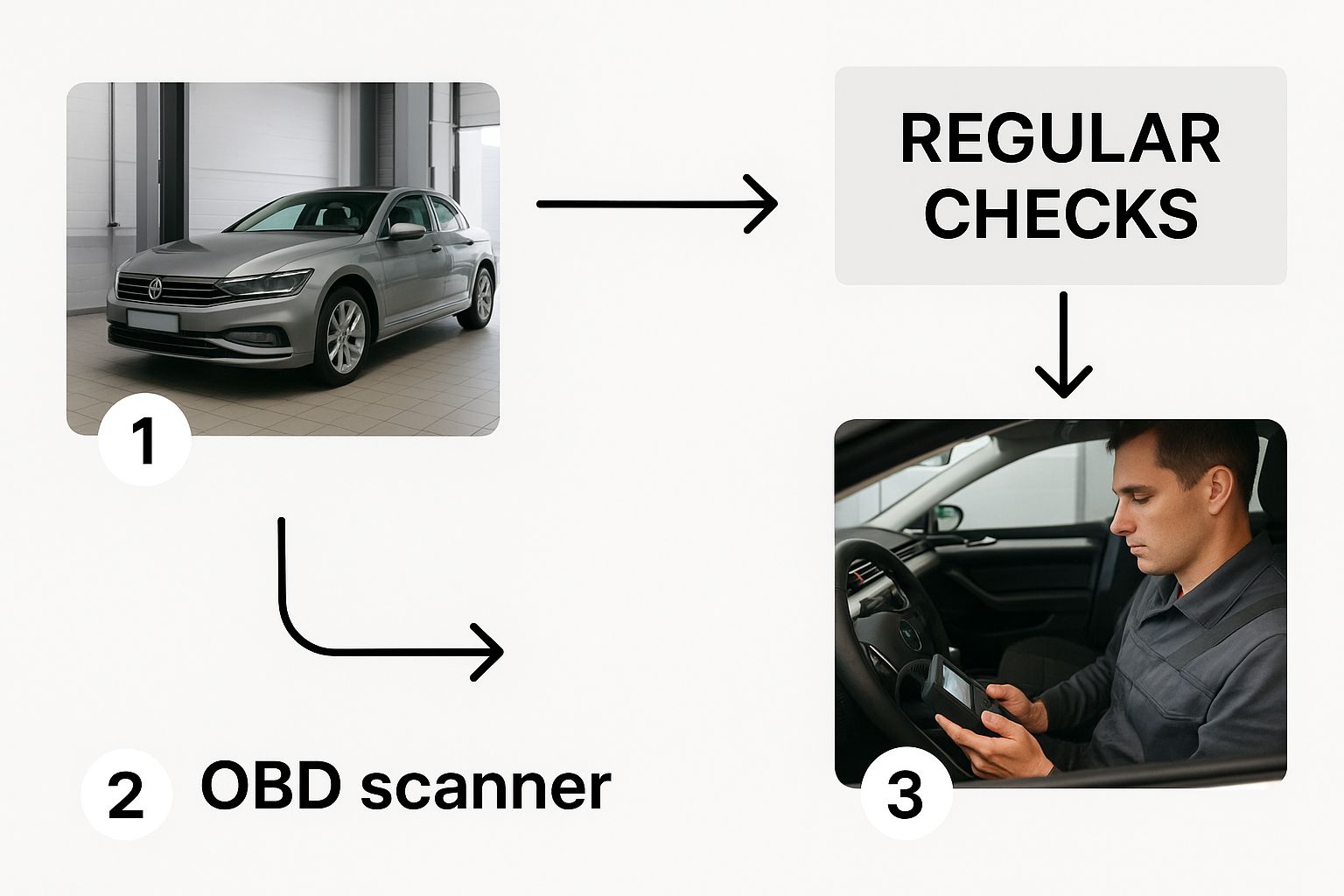
The final step is putting together a clear, straightforward report for you. We’ll walk you through what we found, show you the fault codes, and explain exactly what repairs are needed to sort the issue. We believe in total transparency, so you'll understand the problem and the solution before we even think about picking up a spanner.
To learn more about the fundamentals, have a read of our guide on vehicle diagnostic basics for every driver. At the end of the day, our methodical approach turns a mysterious warning light into a simple, manageable repair plan.
The Technology Powering Modern Vehicle Diagnostics
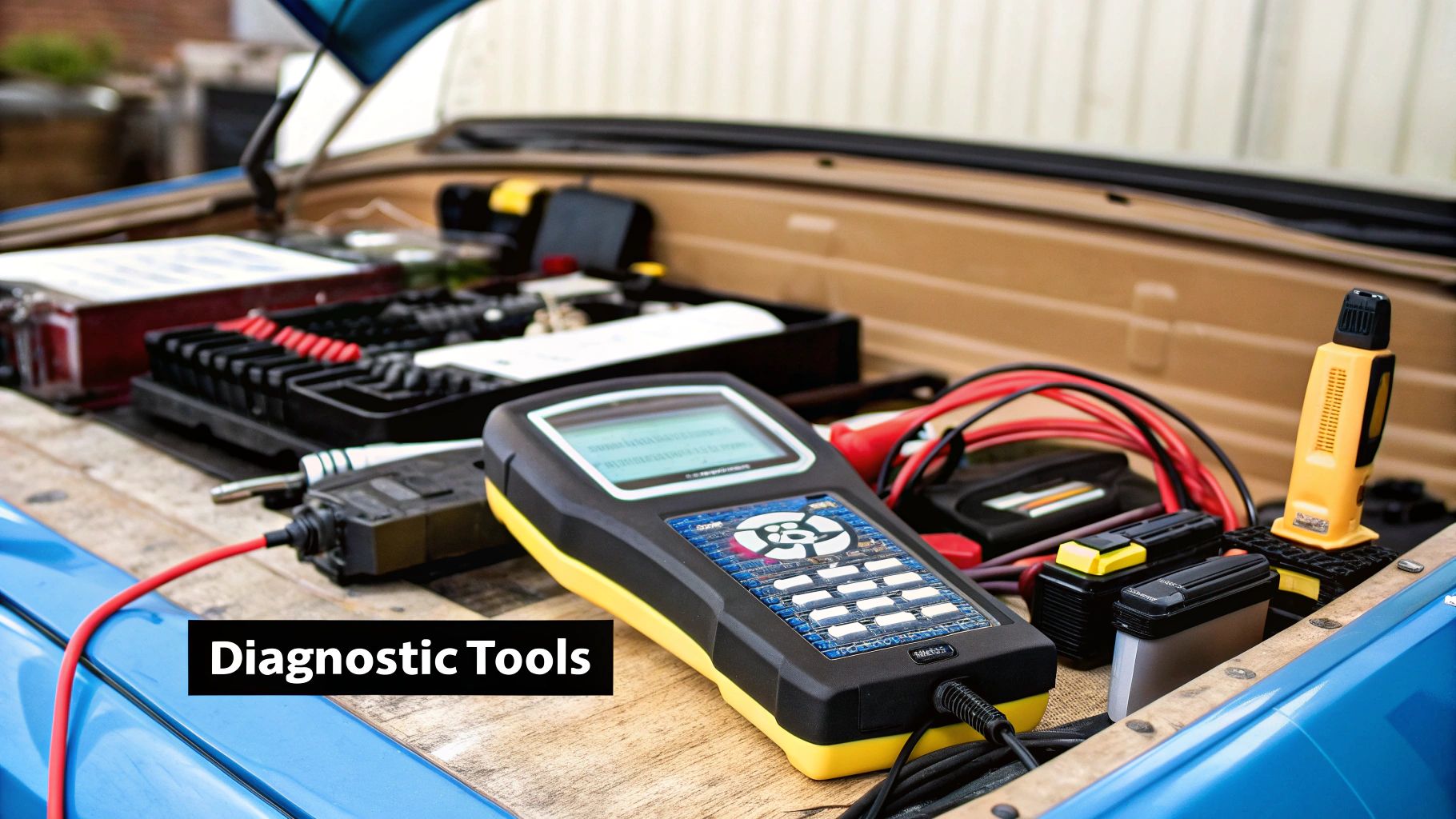
The world of vehicle diagnostics has come a long way from the simple code readers of the past. Today's technology gives technicians a live, detailed picture of your car's health. We can tap into data streams from dozens of sensors monitoring everything from engine timing and fuel mixture to exhaust emissions.
Think of it like this: a basic code reader is like knowing a patient has a fever. Advanced diagnostic tools are like a doctor monitoring their heart rate, oxygen levels, and blood pressure all at once. This depth of information helps a good technician understand not just what is wrong, but why it’s happening, which is the key to an accurate and lasting repair.
This level of equipment represents a serious investment for any garage offering professional car diagnostics in Bedford. A cheap code reader can be bought online for pocket money, but the professional-grade systems we use can run into the thousands. These tools also need constant software updates to keep up with the latest vehicle models and their ever-more complex electronics.
Handling Advanced and EV Systems
The growing number of electric and hybrid vehicles on Bedford's roads brings a whole new set of diagnostic challenges. These cars have high-voltage battery systems, sophisticated power electronics, and regenerative braking. Diagnosing them properly requires specialised tools and training that are a world away from what's needed for a traditional petrol or diesel engine.
This shift towards advanced tech has completely reshaped car diagnostics in the UK. As EVs become more common, the demand for technicians who can handle complex software and high-voltage systems is skyrocketing. The global vehicle diagnostics market, valued at $42.19 billion, is expected to reach $64.22 billion by 2030, largely driven by this complexity. To keep up, technicians in Bedford need to be constantly learning and investing in the latest tools.
Choosing a garage with the right equipment is no longer just a good idea—it is a necessity. Without access to manufacturer-specific software and advanced diagnostic platforms, a technician is effectively working with one hand tied behind their back, especially on newer or more complex vehicles.
The Importance of Manufacturer-Specific Software
While a universal OBD-II scanner has its uses, it often just scratches the surface. Most car manufacturers have their own proprietary software that gives a much deeper level of access to the vehicle's computer systems. A garage with this kind of software can do things generic tools simply can't, like programming a new key or running highly specific system tests.
This capability is what separates a quick code read from a genuine diagnostic investigation. It is how we make certain we find the root cause of the problem the first time around. For a closer look at what goes into a proper assessment, have a look at our guide on what to expect from a professional car diagnostic check. This investment in technology is one of the clearest signs of a workshop’s commitment to doing the job right.
So, What Does a Car Diagnostic Check Cost in Bedford?
It's one of the first questions we get, and it's a fair one. When you're trying to figure out the cost of a car diagnostic check in Bedford, it helps to think of it less as just paying to plug in a machine, and more as an investment in a skilled technician's time and expertise. This initial fee covers the deep investigation needed to get to the root of the problem, saving you a small fortune in guesswork down the line.
That first payment gets you a qualified mechanic armed with some seriously advanced diagnostic gear. Their job isn't just to pull a code—that's the easy part. The real skill lies in interpreting that data, running physical checks, and methodically tracking down the fault.
What Shapes the Final Price?
The complexity of the issue is the biggest factor. A simple, clear-cut fault, like a single failed sensor that's easy to get to, won't take long to pinpoint. That means a lower diagnostic fee for you.
You might have one of those frustrating intermittent electrical faults that only rears its head when you’re driving at a certain speed or on a bumpy road. Tracking that down can involve lengthy road tests and meticulous checks of the wiring looms, which naturally takes more time and expertise.
Think of a diagnostic fee not as a cost, but as the most crucial first step in any successful repair. It stops you from falling into the expensive trap of just swapping out parts until the problem disappears. You're paying for a definite answer.
An Investment in Getting it Right First Time
Paying for a proper diagnostic check is all about precision. The technology inside our cars is getting more complex every year, which is why this field is growing so fast. The global vehicle diagnostics market was valued at around $44.26 billion and is forecast to hit $79.77 billion by 2029. That boom is driven by the sheer need for advanced tools and skills to properly service modern cars, right here in towns like Bedford. You can discover more insights about the vehicle diagnostics market to see just how quickly the technology is evolving.
A thorough diagnostic process means that when we tell you what needs fixing, we're confident it's the right fix. It gives you clarity and puts you back in control, turning a mysterious warning light into a clear, manageable plan. By pinpointing the exact problem from the start, you avoid wasting money and get your car back on the road safely and reliably.
How Accurate Diagnostics Protect Your Safety and Wallet

A professional diagnostic check is much more than just a quick fix to switch off a warning light. It has two jobs, and they are both crucial: keeping you safe behind the wheel and stopping small problems from emptying your wallet.
Think of it like a check-up with your GP. Catching a problem early means you can deal with it before it spirals into something far more serious and potentially dangerous. Ignoring a warning sign in your car is a gamble you really don’t want to take.
Safeguarding Your Journeys
Today’s cars are incredibly complex, packed with systems designed to protect you. We’re talking about things like the Anti-lock Braking System (ABS) and the Supplemental Restraint System (SRS), which is what controls your airbags. If a light comes on for either of these, it’s a clear signal that something’s not right, and their performance could be compromised when you need them most.
An accurate car diagnostics Bedford service is your first line of defence. It takes a vague dashboard light and turns it into a concrete diagnosis—like a faulty wheel speed sensor in your ABS. This allows for a precise repair that gets your car’s safety features back to 100%.
It’s great to see that drivers are becoming more aware of proper vehicle maintenance. With an estimated 1.19 million road traffic deaths reported worldwide each year, the importance of reliable car care can't be overstated. Here in the UK, as our cars get more advanced, early fault detection is a massive part of preventing accidents.
Preventing Unnecessary Repair Costs
From a financial perspective, proper diagnostics are a game-changer. They put an end to the expensive guesswork of the past. The old "swap-it-and-see" approach, where a mechanic replaces parts based on a hunch, is a quick way to run up a massive bill for components you might not have even needed.
A diagnostic scan, in contrast, gets right to the heart of the issue. It pinpoints the exact component that has failed.
This means you only pay for the specific part and the labour to fit it—nothing more. It saves you money, saves you time, and gets the job done right the first time. This level of precision also highlights why understanding the importance of car service history is so valuable; a clear record of targeted repairs shows a car has been looked after properly.
Still Have Questions? Here Are a Few We Hear Often
It's completely normal to have a few questions before booking your car in for a diagnostic check. After all, it’s not something you do every day. To help clear things up, here are the answers to some of the most common queries we get from drivers looking for car diagnostics in Bedford.
How Long Will You Need My Car For?
The first part of the process, plugging in the scanner and pulling the initial codes, is pretty quick. We can usually get a starting point in about 15 to 30 minutes.
From there, the time required depends on what the car tells us. A simple, clear-cut fault code pointing to a specific sensor might be fully diagnosed within an hour. If we're chasing a sneaky, intermittent electrical fault that only shows up when the engine is warm and you're driving uphill, that's going to take more in-depth testing and road time.
Does the Diagnostic Scan Actually Fix the Car?
That’s a common misconception, but a great question. Think of a diagnostic check like a doctor sending you for an X-ray. The X-ray shows the doctor exactly where the bone is broken, but it doesn't set the cast.
It's the same with your car. The scan is a powerful information-gathering tool. It tells our technicians precisely what's wrong and where to look, but it doesn't perform the repair itself. If the scan points to a faulty oxygen sensor, for instance, a technician still needs to physically replace the part and then clear the code from the system.
Should I Go to a Main Dealer or an Independent Garage?
This is a classic dilemma. Main dealers have the advantage of using the manufacturer's own proprietary software, which can be useful for brand-new models or extremely unusual faults. They live and breathe one specific brand.
A good independent garage, like us here at Krause Autos, makes a serious investment in top-tier diagnostic equipment and software that covers a huge range of makes and models. The real benefit is that we combine that tech with years of hands-on experience across all sorts of vehicles. This often translates into a more personal service and better value for you.
At the end of the day, it’s not about the name over the door. It’s about the quality of the tools and, more importantly, the skill of the technician using them. An experienced mechanic at a trusted independent garage can deliver a dealership-level diagnosis for the vast majority of cars on the road.
What If the Computer Doesn't Show Any Fault Codes?
Sometimes, a car has a very real problem—a strange noise, a slight hesitation—that simply has not triggered a fault code yet. This is where a good technician's experience really shines. It is where the "art" of mechanics meets the science.
When there are no codes to guide us, we switch to a more traditional, hands-on approach:
We listen carefully to you describe the problem. When does it happen? What does it feel or sound like?
We conduct a thorough visual inspection, looking for anything obvious like frayed wires, leaking hoses, or worn-out parts.
We use other specialised tools from our workshop, like multimeters to check electrical circuits or smoke machines to find hidden vacuum leaks.
We take the car for a road test to see if we can replicate the issue ourselves under real-world conditions.
This methodical process shows that a proper diagnostic service is about more than just plugging in a computer. It's a combination of modern technology and old-school mechanical know-how to find the root of the problem, no matter what.
For an honest, professional, and thorough approach to vehicle repairs, trust Krause Autos. We combine advanced diagnostic tools with years of hands-on experience to provide the clear answers and quality repairs you need. Visit us online at https://www.krauseautos.co.uk to book your diagnostic check today.


Comments