


Guide to Minor Car Bodywork Repairs: Fix Dents & Scratches
When we talk about minor car bodywork repairs, we’re referring to those smaller cosmetic jobs that fix everyday battle scars. Think polishing out a light scratch, touching up a stone chip, or sorting out a small dent. The goal is to get your car looking its best again and protect the paintwork, all without needing to replace entire panels or get into heavy structural work.
Decoding Scratches, Dents, and Chips
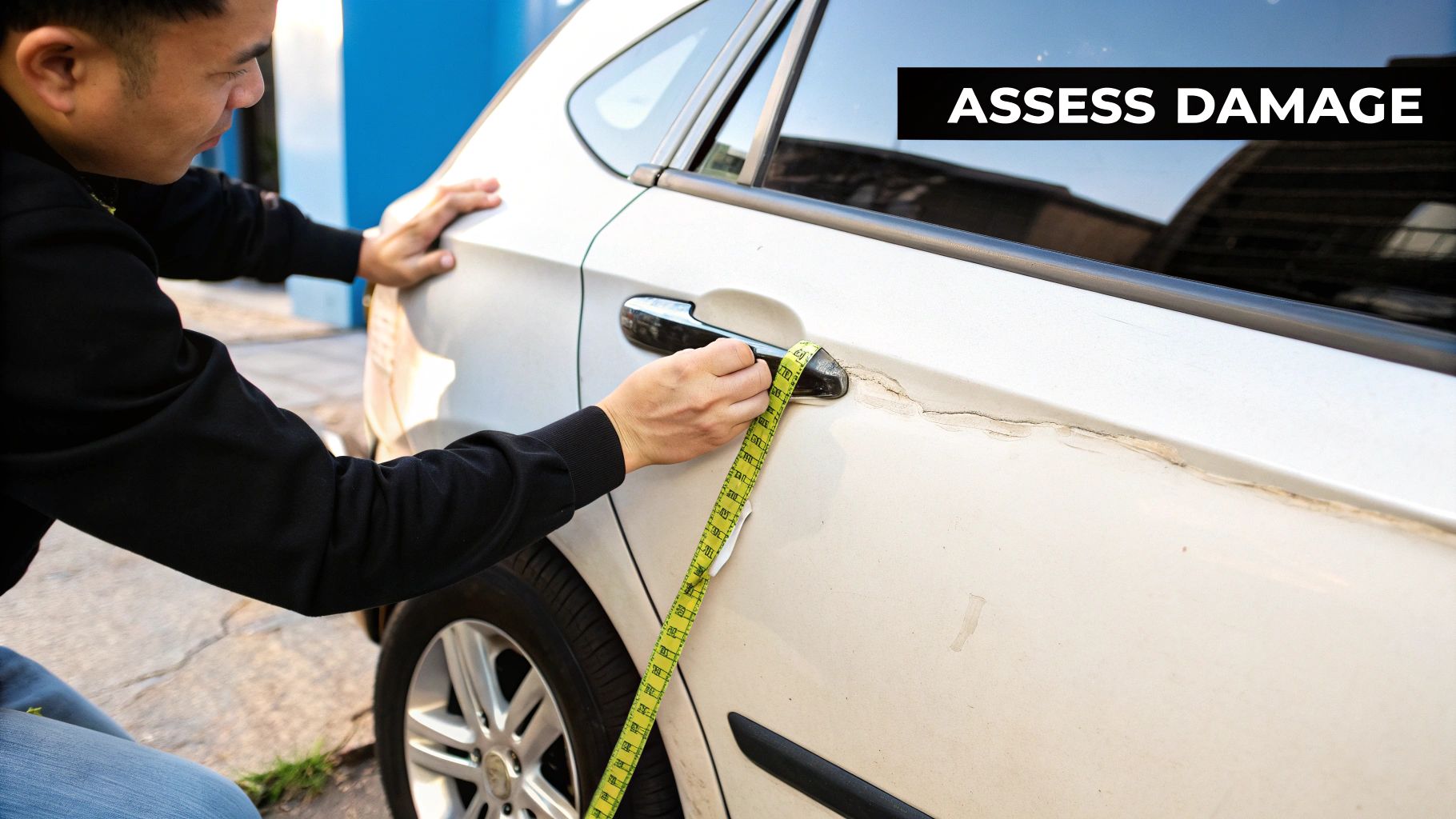
Before you can fix anything, you first need to understand exactly what you're looking at. Not all dings and marks are the same; a light scuff from a hedge is a world away from a deep gouge that’s gone right through to the metal. Knowing the difference is what allows you to choose the right path for the repair.
Let's face it, daily driving is tough on a car's finish. A runaway shopping trolley, a misjudged parking manoeuvre, or gravel flicked up on the motorway can all leave a calling card. Correctly identifying this damage is the first step in any successful minor car bodywork repair.
Common Types of Minor Damage
Most of the little imperfections you'll find on your car fall into a handful of categories. Each has its own story and, more importantly, its own level of risk if you decide to leave it.
Here are the usual suspects:
Surface Scratches and Scuffs: These are the most superficial wounds, often only affecting the top clear coat of your paint. They usually look like faint lines and are caused by anything from brushing against overgrown bushes to using the wrong sponge when washing the car.
Deeper Paint Scrapes: A more serious problem. These scrapes have broken through the clear coat and the colour layer, sometimes revealing the primer beneath. This kind of damage is the result of more significant contact, like scraping against a brick wall or another car.
Small Dents: We’ve all been there—those frustrating shallow depressions in a panel, often with the paint still intact. The classic cause is another car door swinging open into yours in a car park, but they can also come from hail or even falling acorns.
Stone Chips: These tiny but deep pits are the bane of any motorway driver, most often appearing on the bonnet and front bumper. They're caused by stones and other road debris hitting your car at high speed, and they can easily go through every layer of paint, exposing bare metal.
To give you a clearer picture, here’s a quick breakdown of what you might be dealing with.
Minor Bodywork Damage at a Glance
Damage Type | Common Cause | Typical Repair Method |
|---|---|---|
Surface Scratch/Scuff | Light contact, improper washing | Machine polishing, touch-up pen |
Deep Paint Scrape | Scraping against walls, other cars | Filling, sanding, priming, and paint |
Small Dent | Car park dings, hail, falling objects | Paintless Dent Removal (PDR) |
Stone Chip | Debris flicked up from the road | Touch-up kit, chip repair system |
This table helps illustrate why knowing the damage type is so important for choosing the right fix.
The greatest risk of ignoring any damage that breaks the paint's surface is rust. Once moisture reaches the underlying metal panel, corrosion can begin, turning a small cosmetic problem into a much larger, more expensive issue to fix.
Why Correct Identification Matters
Knowing a scuff from a deep scrape is fundamental. A light scuff might just need a good polish to disappear completely. A scrape that’s down to the metal, demands a proper repair—filling, priming, and painting—to stop rust in its tracks. If you get the diagnosis wrong, you could waste time on a fix that doesn't work or, even worse, let a small problem fester.
For a more detailed look at the different fixes available, you can explore our guide on the various types of car body repairs. Having this knowledge under your belt will help you understand what a professional is quoting for and why.
What Should Minor Car Bodywork Repairs Cost?
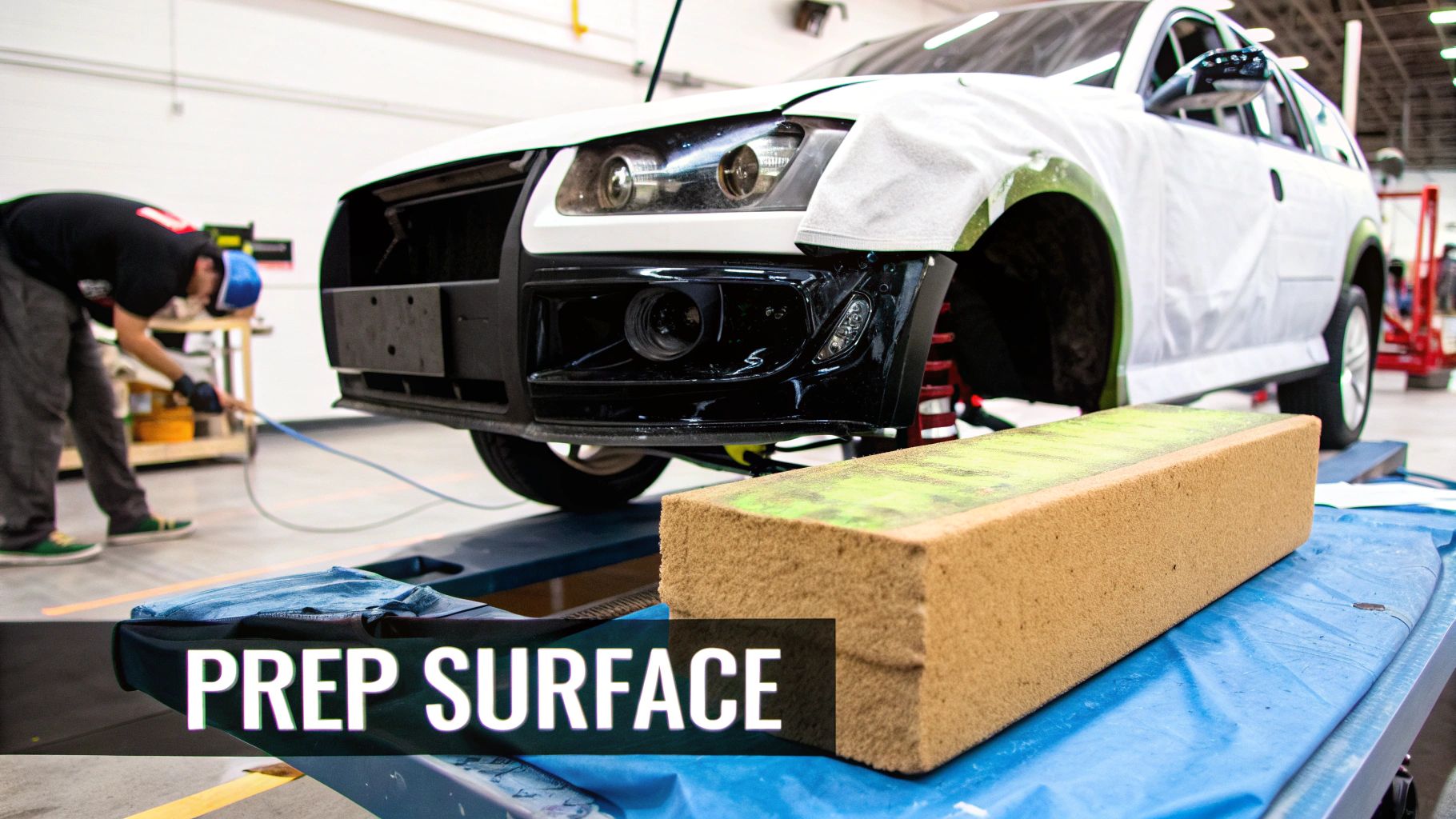
It’s the question every driver asks after that sickening crunch or scrape: "How much is this going to set me back?" Understanding what goes into the cost of minor car bodywork is key for managing your budget and knowing you’re getting a fair price.
The final bill isn't just a number plucked from thin air. It’s a careful calculation based on the specific damage your car has sustained. At its core, the more time, skill, and materials a repair demands, the more it will cost. A light scuff that a technician can polish out is always going to be far cheaper than a deep scratch that needs sanding back, priming, and a fresh coat of perfectly matched paint.
What Influences the Final Price?
Several key factors determine the final quote you receive. While the size and depth of the damage are the most obvious, its location on the car is just as important. A simple dent on a flat, easy-to-access door panel is a much simpler job than tackling one on a sharp body line or a difficult-to-reach curved area.
Your car’s paint finish also plays a huge role in the cost. A standard, solid colour is the most straightforward and affordable to match.
Metallic and Pearlescent Paints: These finishes are popular for a reason – they sparkle. But that sparkle comes from tiny metal or ceramic particles mixed into the paint. Recreating this effect perfectly requires more advanced techniques and materials, which bumps up the price.
Three-Stage Paints: Often seen on high-end or luxury cars, these paints involve a base coat, a special mid-coat for colour and depth, and a final clear coat. This layered process is far more complex and time-consuming to replicate, making it the most expensive type of paint repair.
Nothing beats an in-person inspection for an accurate quote. A skilled technician can properly assess the true depth of the damage, spot any hidden issues underneath, and give you a precise breakdown of the labour and materials needed to get that flawless finish.
Typical Cost Ranges for Minor Repairs
So, what should you actually expect to pay? To give you a ballpark figure, minor dents and paint scrapes in the UK typically range from £60 to £600, depending entirely on the damage's severity and location.
For instance, repairing deeper scratches that have gone through the clear coat could cost up to £210, while the average car dent repair often lands around the £335 mark. These prices are for cosmetic issues where we're repairing the existing panel, not replacing it entirely.
A fantastic, cost-effective method for the right kind of damage is Paintless Dent Removal (PDR). If you have a dent but the paintwork is still intact, PDR specialists can use special tools to gently massage the metal back into its original shape from behind the panel. It’s a highly skilled process that avoids the need for fillers, sanding, and repainting, often making it much cheaper and quicker than a traditional repair.
If you'd like a more detailed look at what to expect, check out our guide on the cost of car body repairs in 2025 for a complete overview.
A Step-by-Step Guide to Simple DIY Fixes
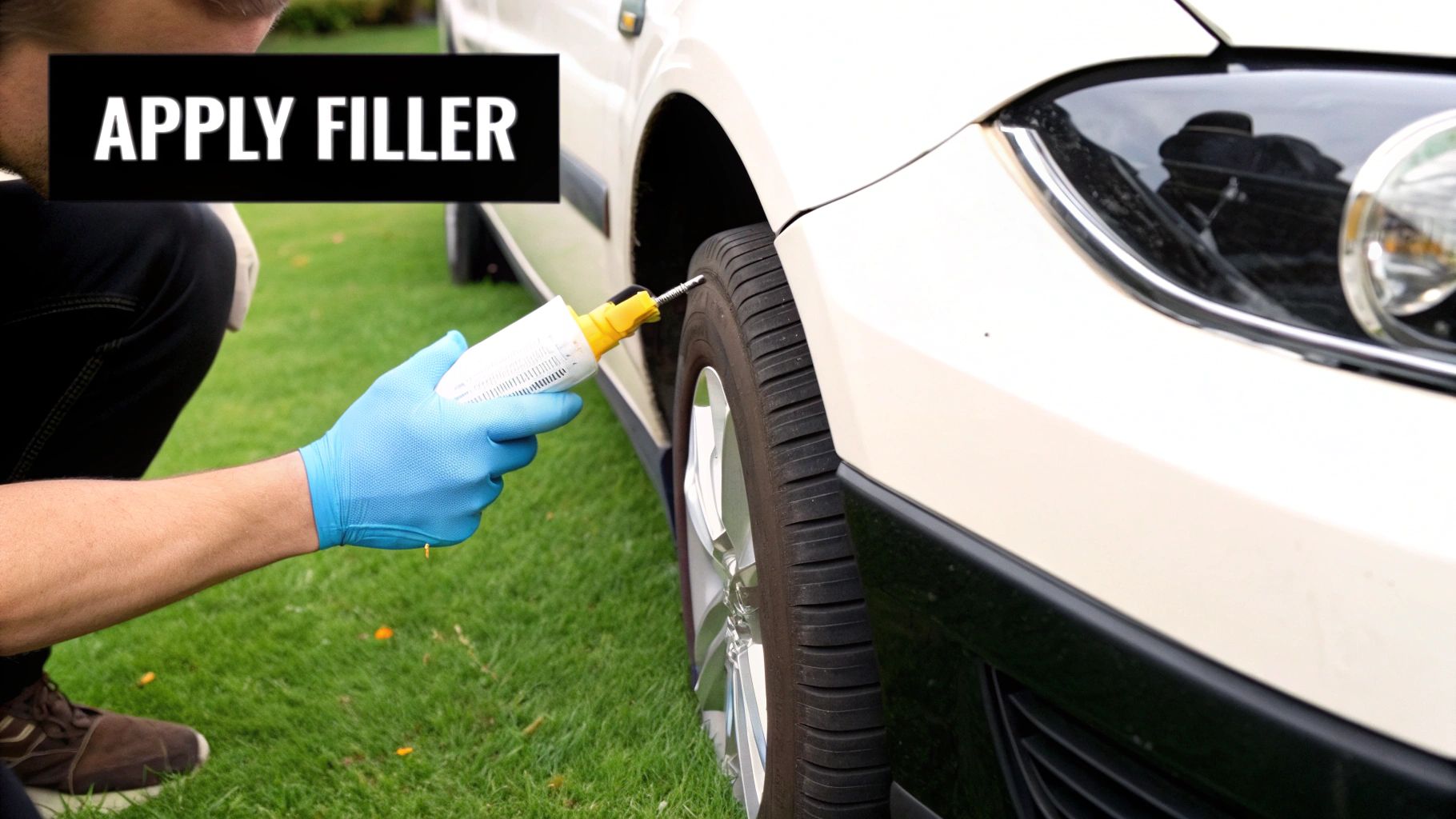
Fancy having a go yourself? If you’ve got a bit of patience and a steady hand, tackling some minor car bodywork repairs can be a really satisfying weekend project. With the right kit and a clear plan, you can sort out those little imperfections and protect your car’s paint without even leaving your driveway. The secret is to start small and work carefully.
Two of the most common jobs you can definitely handle at home are fixing a light surface scratch and touching up a small paint chip. Neither of these requires expensive, specialist equipment – just a bit of elbow grease. Before you begin, it’s always a good idea to get all your bits and pieces ready.
Fixing a Light Surface Scratch
We’re talking about those annoying little scuffs that haven't broken through the shiny top layer of paint (the clear coat). A good test is to run your fingernail gently across it. If your nail doesn't catch in the groove, it’s probably a surface-level issue you can polish out.
What You'll Need:
Good quality car shampoo and water
Two clean microfibre cloths
A decent scratch removal or polishing compound
An applicator pad
The Process:
Get It Clean: First, give the whole panel a thorough wash and dry. Any lingering grit or dirt will just create more scratches when you start polishing, and you’ll end up making things worse.
Apply the Polish: Dab a small amount of polishing compound onto your applicator pad. Work it into the scratch using small, overlapping circular motions. You don’t need to press too hard; light to moderate pressure is plenty.
Buff and Check: After a minute or two, grab a clean microfibre cloth and wipe away the hazy residue. Have a look at the scratch from a few different angles to see how you’re getting on.
Go Again If Needed: Don't be surprised if you need to repeat the process two or three times to make the scratch vanish completely. Patience is key here – let the compound do the heavy lifting.
The biggest mistake people make is using too much force, which can burn through the surrounding clear coat. The aim is to gently level the surface, not aggressively sand it down. Let the tiny abrasives in the compound work their magic.
Touching Up a Small Paint Chip
Stone chips are the worst. They can blast right through the paint and primer, leaving the bare metal exposed to the elements. For this kind of minor car bodywork repair, a paint touch-up pen matched to your car’s specific colour code is your best friend.
What You'll Need:
A colour-matched touch-up paint pen
Wax and grease remover
Microfibre cloths
A touch of polishing compound (this is optional)
The Process:
Prep the Chip: Use the wax and grease remover to get the chipped area spotlessly clean. This is key because it means the new paint has a perfect surface to stick to.
Apply the Paint: Give the touch-up pen a good shake. Carefully dab a tiny amount of paint directly into the chip. The trick is to build it up in thin layers rather than trying to fill it in one go, which just creates a blob.
Let It Dry: Give each layer time to dry completely. Always check the instructions on the pen, but this can take anywhere from 30 minutes to a few hours.
Smooth the Finish: Once the paint is fully cured (give it a day or so), you can very gently use a fine polishing compound to blend the edges of your repair with the original paintwork for a seamless look.
If you want to look deeper into tackling scratches, feel free to check out our DIY guide to minor car scratch repair for more handy tips and tricks.
The Professional Repair Process from Start to Finish
When a scuff or dent is just too much to tackle on your driveway, it’s time to call in the professionals. Handing your keys over to a trusted bodyshop is the surest way to get a flawless result. Let’s walk through what actually happens behind those workshop doors, so you can see the skill and precision that goes into high-quality minor car bodywork repairs.
It all kicks off with a detailed damage assessment. A seasoned technician will give the affected area a proper look-over, figuring out just how deep that scratch goes or how severe the dent really is. They’re also looking for hidden problems that might lurk beneath the surface. This expert eye allows them to give you a clear, honest quote detailing the work and materials needed.
Surface Preparation and Dent Removal
Once you give them the green light, the real work begins. First up is surface preparation. The area is cleaned thoroughly to get rid of any dirt, wax, or road grime that could spoil the repair. You can't paint on a dirty canvas.
If there's a dent, the technician will choose the best method to fix it. For the right kind of damage, Paintless Dent Removal (PDR) is a brilliant technique where the panel is gently massaged back into its original shape from behind. For deeper or more awkward dents, they might need to use specialised tools like a stud welder and slide hammer to carefully pull the metal out, getting it as close to perfect as possible before any filler is needed.
Sanding, Priming and Colour Matching
After the metalwork is sorted, a thin skim of high-quality body filler might be applied to smooth over any tiny remaining imperfections. This is where the real artistry comes in. The filler is expertly sanded down until it’s perfectly flush with the surrounding panel—a process that takes a steady, experienced hand to get just right.
This image shows the different sanding grits a technician works through to create that perfectly smooth foundation.
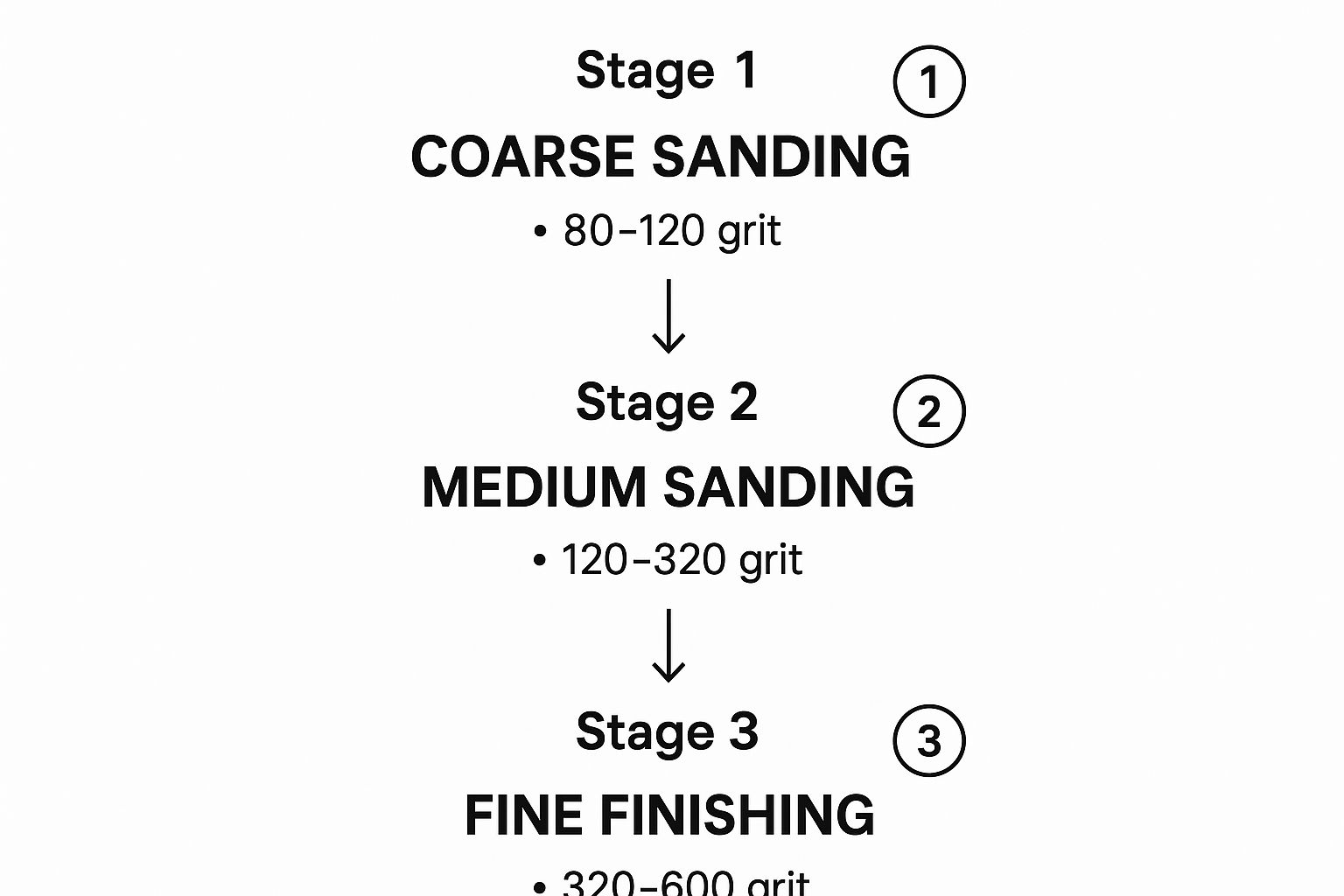
Moving from a coarse grit to an ultra-fine one is what guarantees the surface is flawless before any paint is applied.
Next, a layer of primer is sprayed on. Primer is a key component; it protects the bare metal from rust and creates a stable, uniform base for the new colour to stick to. Skimping on this step is a recipe for a poor finish that will fail down the line.
Now for one of the most technical steps: colour matching. Using a device called a spectrophotometer and advanced computer software, the technician analyses your car's paint. They create a formula for a perfect match, even accounting for the slight fading your paintwork might have from years of sun exposure. This is the difference between a repair that sticks out like a sore thumb and one you’d never know was there.
The Final Finish
With the colour mixed and ready, your car is moved into a controlled spray booth. This dust-free, temperature-managed environment is absolutely key for a showroom-quality finish. The technician skilfully applies the base coat (the colour itself), followed by a tough clear coat that gives the paint its glossy shine and protects it from UV rays and light scratches.
Each layer is meticulously applied, blending seamlessly into the existing paintwork. After the new paint has cured properly, the entire area is polished to perfection, completely erasing any sign that the damage ever happened.
Why a Professional Repair Protects Your Car's Value
While tackling a tiny scuff yourself can be tempting, getting a professional to handle even minor car bodywork repairs is one of the smartest investments you can make. It’s about more than just aesthetics; a proper repair is key for protecting your car’s long-term health and, its value.
Think of it this way: a rattle can from the local shop is a bit like using a paintbrush to perform surgery. A professional bodyshop, has a surgeon's toolkit. They won't just find a colour that’s ‘close enough’; they use specialist equipment to mix an exact match to your car's unique paint code, factoring in subtle fading from sun exposure over the years. This dedication is what makes a repair truly invisible.
Defending Against Future Problems
A top-quality repair delivers far more than just a flawless visual finish. When a technician properly treats and seals a scratch or dent, they're creating a robust, weatherproof barrier. This is your car's best defence against moisture getting in and causing rust, which can quietly spread under the paint and lead to much bigger, more expensive problems down the line.
Navigating this takes real expertise. The UK's motor vehicle repair sector, valued at over £9 billion, is currently facing challenges like skilled labour shortages and supply chain disruptions. Yet, professionals are perfectly positioned to manage these pressures and deliver a standard of work that’s simply out of reach for a DIYer. You can read more about the UK vehicle repair market trends and its current state.
A professional repair is an investment in your car's future. It stops a small cosmetic issue from turning into a costly structural nightmare and safeguards its resale value, making life much easier when you want to sell or trade it in.
Protecting Your Car's Resale Value
At the end of the day, a car with pristine bodywork will always fetch a better price than one dotted with dings, scrapes, and mismatched patches of paint. Obvious damage is a huge red flag for potential buyers, as it often suggests the rest of the car hasn't been well looked after either.
By choosing a professional for your minor car bodywork repairs, you preserve your car's kerb appeal and protect its financial worth. A clean vehicle with a well-documented repair history shows pride of ownership and helps you secure the best possible price when it’s time to sell. For more great advice, check out our guide to 2025 car bodywork repair tips for everyday drivers.
When a Small Scratch Is a Bigger Problem
It's easy to dismiss a minor blemish on your car, but not every little mark is as straightforward as it seems. Sometimes, what looks like a simple fix can be the tip of the iceberg, hiding a more complex issue or one that could spiral if you leave it. This is especially true with modern cars, where even a small knock can have surprisingly far-reaching consequences for the vehicle's systems.
Take a seemingly innocent scratch. If it's deep enough to break through the clear coat and paint, you’ve essentially opened the door for rust. As soon as moisture gets to the bare metal panel, corrosion sets in. What began as a tiny line can quickly spread beneath the surface, eventually causing the paint to bubble and flake. Before you know it, you're looking at a much more involved and expensive minor car bodywork repair.
Small dents can be just as deceptive. A dent on a flat, open panel is one thing, but if it’s on a sharp body line or crease, it can actually weaken the structural integrity of that panel. Getting those right is a real skill. A technician doesn't just push the dent out; they have to meticulously recreate the panel's original, complex contours.
Modern Cars and Their Hidden Complexities
Today’s cars are practically computers on wheels, packed with advanced technology. Many of these systems use sensors that are cleverly embedded into the bodywork, particularly in the bumpers.
That minor scuff on your bumper might look like nothing, but it could have easily knocked:
Parking sensors: Your best friend for navigating tight spots.
Blind-spot monitoring systems: A safety feature for changing lanes.
Adaptive cruise control sensors: The tech that keeps a safe distance from the car ahead.
Even a slight impact can throw these sensors out of alignment, and they won't work properly again until they're professionally recalibrated. This isn’t a simple cosmetic touch-up; it’s a specialist job that requires diagnostic equipment.
The sheer complexity of modern vehicles is a major factor behind rising repair bills. An impact that would have been a straightforward paint job a decade ago might now need intricate sensor diagnostics and recalibration, adding significant labour and cost to the final invoice.
This isn't just an observation; it's a trend we're seeing across the whole industry. UK vehicle repair costs have shot up, with the average claim climbing 24.7% from £4,162 in 2019 to a projected £5,191 by mid-2025. You can examine the numbers yourself and explore more about the rising UK repair cost trends to see how these pressures are affecting everyone.
Knowing when a small issue hints at a bigger problem is key. It helps you make a smart decision and get the right expert help before a minor headache turns into a major one.
Frequently Asked Questions
It’s completely normal to have a few questions when you’re figuring out the best way to deal with minor car bodywork damage. Let's walk through some of the common queries we hear from drivers.
Will a Minor Bodywork Repair Show Up on My Car's History Report?
This is a great question, and the answer usually comes down to how you pay for the work. If you handle the cost yourself, without involving your insurance company, the repair typically stays off the record. Vehicle history reports get their information from sources like insurance providers, finance companies, and the DVLA.
So, if you make an insurance claim, even for a small job, it’s almost certain to be logged and become a permanent part of your car’s history.
How Long Does a Typical Minor Repair Take?
The time needed really hinges on the type and extent of the damage. A straightforward scratch touch-up might only take a few hours.
A small dent that needs to be filled, sanded, painted, and then properly cured could easily take a day or two. Factors like the bodyshop's current workload, the time it takes for the new paint to harden, and how complex the colour match is will all play a part in the final timeline.
Is It Worth Repairing Minor Damage on an Older Car?
This really depends on what your plans are for the car. If you're thinking of selling it, then yes, fixing up noticeable cosmetic flaws can make it much more attractive to buyers and boost its value. Often, you'll see a healthy return on what you spend.
If you're planning to keep driving it for a while, repairing scratches and chips is simply good maintenance. It's the best way to stop rust from taking hold, which can lead to far more serious and costly issues down the line.
Think of it as protecting the long-term health of your vehicle. A small investment in a professional repair today can stop corrosion in its tracks, preserving the structural integrity of your car's panels for years.
For any job, whether it's a tiny scuff or something more significant, getting an expert opinion is always the best place to start. The team at Krause Autos is here to give you honest advice and high-quality bodywork solutions to keep your car looking great and protected from the elements. Whether you're dealing with a small scratch or need a full panel repair, you can learn more about our professional bodywork services at https://www.krauseautos.co.uk/mechanical-repairs-bodywork.


Comments