


How Often to Service a Car: The 2025 Guide for UK Drivers
Car servicing often slips down the to-do list, yet skipping it can lead to more than just an inconvenient breakdown. Here is a shocker. The car service and repair sector pumps about £9 billion a year into the UK economy. Yet most drivers still believe a quick oil change is all their car needs. The real truth is that missing regular checks not only risks your wallet, but could also cut your car’s lifespan short in ways you would never expect.
Table of Contents
Quick Summary
Understanding Recommended Service Intervals
Navigating the world of car maintenance can feel like solving a complex puzzle. Every vehicle has unique requirements, and understanding recommended service intervals is crucial for keeping your car running smoothly and preventing costly repairs.
The Basics of Service Scheduling
Most modern vehicles follow a standard service schedule, but this isn’t a one-size-fits-all approach. According to The Motor Ombudsman, consulting your vehicle’s owner manual or manufacturer is the most reliable way to determine specific service intervals. These recommendations vary significantly between different car models and manufacturers.
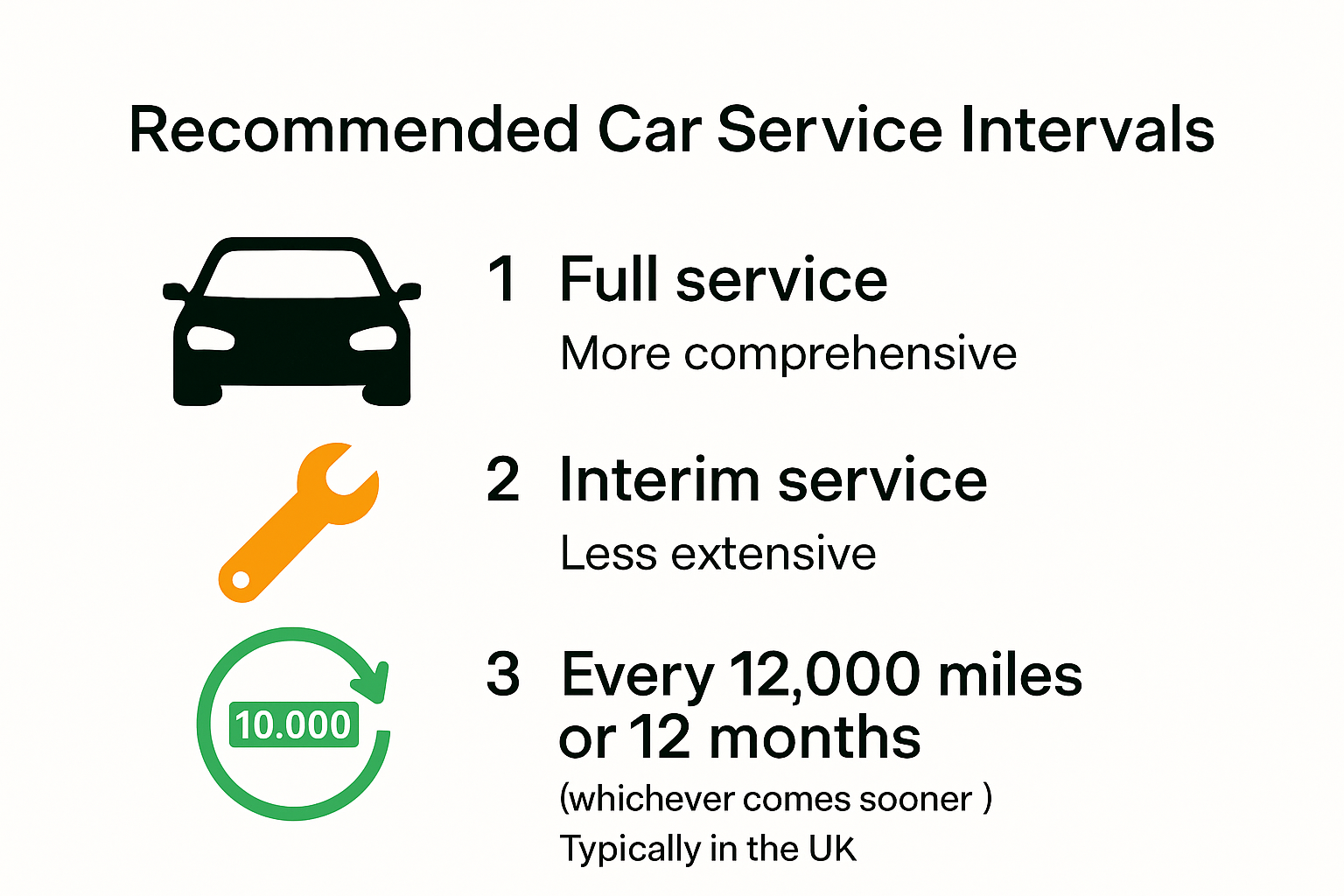
Typically, service intervals are based on two key measurements: time and mileage. The AA recommends a full service every 12 months or 12,000 miles, whichever comes first. For drivers who rack up more miles or have more demanding driving conditions, an interim service every 6 months or 6,000 miles might be more appropriate.
Factors Influencing Service Frequency
Multiple factors can impact how often you should service your car. Your driving habits, vehicle age, and typical road conditions play significant roles. High-mileage drivers, those frequently driving in urban stop-start traffic, or individuals using their vehicles for commercial purposes might require more frequent servicing.
The RAC outlines a comprehensive service schedule that includes:
- Regular maintenance
for oil and filter replacements
- Interim service
every 6 months or 6,000 miles
- Full service
every 12 months or 12,000 miles
Modern vehicles equipped with advanced onboard diagnostics can often provide precise service interval recommendations. Many cars now feature warning lights or digital displays that alert drivers when maintenance is due, taking the guesswork out of scheduling.
The Importance of Consistent Maintenance
Regular servicing isn’t just about following a schedule. It’s a proactive approach to vehicle care that can prevent minor issues from becoming major, expensive problems. By maintaining your car consistently, you’ll potentially extend its lifespan, improve fuel efficiency, and ensure optimal performance.
If you’re unsure about your specific vehicle’s service requirements, our comprehensive guide on car servicing provides detailed insights tailored to UK drivers. Understanding and adhering to recommended service intervals is an investment in your vehicle’s longevity and your own peace of mind.
To help you quickly compare the different types of car services and their recommended intervals, the following table summarises key points from the service scheduling guidance above:
Tailoring Service Schedules to Different Drivers

Car servicing isn’t a universal experience. Different drivers have unique needs based on their vehicle type, driving habits, and lifestyle. Understanding how to customise your service schedule can save money and keep your vehicle running optimally.
Service Schedules for Different Vehicle Types
Each vehicle category demands a specific maintenance approach. Compact city cars typically require less intensive servicing compared to heavy-duty commercial vehicles. According to the UK Department for Transport, regular vehicle maintenance is crucial for road safety and reducing emissions.
Family vehicles often experience more wear due to frequent trips, child transportation, and varied driving conditions. These cars might need more frequent interim services. Commercial vehicles like delivery vans or work trucks endure significantly higher mileage and stress, necessitating more rigorous maintenance schedules.
The following table highlights how service needs differ for common vehicle types mentioned in the article:
Weekly Safety Checks Between Services
The Royal Society for the Prevention of Accidents (RoSPA) recommends drivers perform weekly checks using the POWDER acronym:
- Petrol
: Check fuel levels
- Oil
: Verify oil condition and levels
- Water
: Check coolant and windscreen washer fluid
- Damage
: Inspect tyres, bodywork, and lights
- Electrics
: Test battery and electrical systems
- Rubber
: Check tyre pressure and condition
These quick checks can prevent potential issues between scheduled services and enhance overall vehicle safety.
Professional Insights and Economic Impact
The UK government highlights that the car service and repair sector contributes approximately £9 billion annually to the economy, underscoring the importance of professional maintenance. Learn more about maintaining your vehicle’s performance through our comprehensive guide tailored for UK drivers.
Regular servicing isn’t just about mechanical upkeep. It’s an investment in your vehicle’s longevity, safety, and performance. Whether you’re a daily commuter, a weekend adventurer, or a business professional, understanding and adapting your service schedule ensures your car remains reliable and efficient.
Signs Your Car Needs Immediate Attention
Every driver should know the critical warning signs that signal potential vehicle problems. Recognising these indicators early can prevent costly repairs and ensure your safety on the road.
Critical Dashboard Warning Signals
Your car’s dashboard is a communication hub that provides essential alerts about your vehicle’s health. According to The AA, certain warning lights demand immediate professional attention. The check engine light, for instance, could indicate anything from a minor sensor issue to a serious mechanical problem.
Some dashboard warnings require urgent action:
- Red warning lights
: Indicate critical issues that could cause immediate vehicle failure
- Amber warning lights
: Suggest a developing problem that needs professional assessment
- Persistent warning lights
: Never ignore lights that remain illuminated after starting the engine
Unusual Vehicle Sounds and Performance Changes
Unusual noises and performance changes are often early indicators of potential mechanical issues. The RAC highlights several key sounds that should prompt immediate investigation:
Squealing brakes might indicate worn brake pads
Engine knocking could signal internal mechanical problems
Grinding sounds during gear changes suggest transmission issues
Whistling from under the bonnet might indicate belt or vacuum system problems
Performance changes like reduced fuel efficiency, difficulty starting, unexpected vibrations, or decreased engine power are additional red flags that warrant professional inspection.
Fluid Leaks and Visual Inspections
Fluid leaks are serious indicators of potential mechanical problems. Your comprehensive electrical system guide can help you understand these complex issues. Different coloured fluid leaks suggest various potential problems:

- Blue fluid
: Windscreen washer fluid leak
- Green fluid
: Potential coolant system issue
- Brown or black fluid
: Oil leak
- Red fluid
: Transmission or power steering fluid problem
Regular visual inspections can catch these issues early. Look for puddles under your parked vehicle, check fluid levels regularly, and pay attention to any changes in your car’s performance or unusual smells.
Remember, early detection of these signs can save you significant time and money. While some issues might seem minor, they can quickly escalate into major repairs if left unaddressed. When in doubt, consult a professional mechanic who can provide a comprehensive diagnostic assessment of your vehicle’s condition.
Choosing the Right Garage for Complete Care
Selecting the right garage is crucial for maintaining your vehicle’s performance, safety, and longevity. Not all service centres are created equal, and understanding how to choose a reliable automotive partner can save you time, money, and potential headaches.
Evaluating Garage Credentials and Reputation
Certifications and professional affiliations are key indicators of a garage’s quality and expertise. According to The Motor Ombudsman, reputable garages should adhere to specific service and repair codes that guarantee transparent, fair, and competent service.
Customer satisfaction is another critical metric. What Car? survey data revealed that independent garages consistently outperform franchised workshops, scoring 92.4% in customer satisfaction compared to 88.0% for franchise locations. This suggests that smaller, more personalised service centres often provide superior care.
Essential Factors in Garage Selection
When choosing a garage, consider these crucial elements:
- Specialisation
: Look for garages experienced with your specific vehicle type
- Diagnostic Equipment
: Modern garages should have advanced diagnostic tools
- Transparency
: Clear pricing and detailed service explanations are essential
- Warranty
: Reputable garages offer warranties on parts and labour
Our comprehensive guide to selecting local automotive services can help you make an informed decision about your vehicle’s care.
Verifying Garage Credibility
Citizens Advice recommends using garages approved by recognised industry bodies. These approved garages typically have:
Clear complaints procedures
Adherence to industry codes of practice
Proven track record of professional service
Trained and certified technicians
Additionally, research the garage’s online reviews, ask for recommendations from friends and family, and don’t hesitate to ask about their qualifications and experience. A trustworthy garage will be transparent about their capabilities and happy to provide references.
Remember, the cheapest option isn’t always the best. Investing in a reputable, skilled garage can prevent costly repairs down the line and ensure your vehicle remains safe, efficient, and reliable. Your car is a significant investment, and choosing the right maintenance partner is crucial to protecting that investment.
Frequently Asked Questions
How often should I service my car in the UK?
Typically, a full service is recommended every 12 months or 12,000 miles, whichever comes first. High-mileage drivers or those facing more demanding conditions may need an interim service every 6 months or 6,000 miles.
What are the signs that my car needs immediate attention?
You should look out for critical dashboard warning lights, unusual sounds or performance changes, and fluid leaks. Addressing these issues promptly can prevent costly repairs.
What should I include in my weekly safety checks?
Use the POWDER acronym: check Petrol (fuel levels), Oil (condition and levels), Water (coolant and washer fluid), Damage (tyre condition and lights), Electrics (battery and electrical systems), and Rubber (tyre pressure and condition).
How can I choose the right garage for servicing my car?
Evaluate garages based on their credentials, customer satisfaction ratings, specialisation in your vehicle type, and transparency in pricing. Look for garages that are approved by recognised industry bodies.
Ready for Stress-Free Car Servicing in Bedfordshire?
Struggling to keep up with regular car servicing can leave you facing serious problems. If you worry about missing hidden warning signs or if you are unsure when your next check is due, you are not alone. As explained in this guide, ignoring service intervals or those persistent dashboard lights can quickly turn a small issue into an expensive repair. Consistent maintenance and prompt action save money and extend the life of your vehicle.
Stop guessing and leave your car’s care to the trusted experts in Sandy, Bedford and the wider Bedfordshire area. At Krause Autos, we cover everything from annual car servicing and MOTs to advanced diagnostics, repairs, and bodywork. Book your next service or learn more about our comprehensive car care solutions.Take action now to keep your car running smoothly, reliably and safely all year round.
Recommended
- Car Servicing Explained: What Every UK Driver Needs in 2025
- Why Regular Car Service Matters in 2025: Essential for Every Driver
- Annual Car Servicing Benefits: Why Every Owner Needs It in 2025
- How to Save on Car Repairs: Smart Tips for All Drivers 2025
- Car Diagnostic Check Guide 2025: Essential Tips for UK Drivers
- Car Warranty and Repairs: Your 2025 Guide for Every Driver


Comments