


Car Diagnostics Sandy Guide to Vehicle Health Checks
For drivers in Sandy, car diagnostics is the process of figuring out what your car is trying to tell you through its dashboard warning lights. Our technicians plug specialised scanners into your car's brain—the On-Board Diagnostics (OBD-II) port—to read specific trouble codes. This pinpoints exactly which system needs attention and why, taking all the guesswork out of the equation.
What Car Diagnostics Really Means for Your Vehicle
When a warning light pops up on your dashboard, it's easy to feel a bit of panic. But think of it this way: your car is constantly talking about its health, and each light is a message about how it's feeling. The process of car diagnostics is our way of translating those electronic messages into plain English.
Every modern car has an On-Board Diagnostics (OBD-II) port. This little port is the gateway to your vehicle's entire network of computer systems, which keep an eye on everything from engine performance to exhaust emissions.
Translating Codes into Clues
Our technicians connect advanced scanning tools to this port to pull out what we call Diagnostic Trouble Codes (DTCs). A DTC is a short alphanumeric code that points us in the right direction, telling us which system—and often which specific circuit—is flagging a problem. For instance, a code might point to an oxygen sensor issue, but that does not automatically mean the sensor itself is broken.
That code is just the first clue. It's the starting point for a proper investigation. A skilled technician uses this information to dig deeper, which might involve:
Checking the related wiring for any damage or corrosion.
Inspecting connected parts for wear and tear.
Watching live data streams to see how the system is behaving in real-time.
A Diagnostic Trouble Code tells a technician where to start looking; it does not tell them what to replace. This distinction is what separates a professional diagnostic service from a simple code reading.
The Growing Need for Expert Diagnostics
Modern cars, especially the latest electric and hybrid models, are incredibly complex, making professional diagnostics more critical than ever. The global vehicle diagnostics market was valued at around USD 42.19 billion and is expected to hit USD 64.22 billion by 2030. This boom shows just how sophisticated vehicle systems have become, demanding advanced tools and genuine expertise to sort out.
By taking this thorough approach, we give drivers in Sandy a complete picture of what’s happening under the bonnet. You get a clear explanation of the fault and the most effective way to fix it for good. To learn more, check out our guide on finding expert car diagnostics near you in the UK. This comprehensive method helps fix the root cause, saving you time and money.
Understanding Common Dashboard Warning Lights
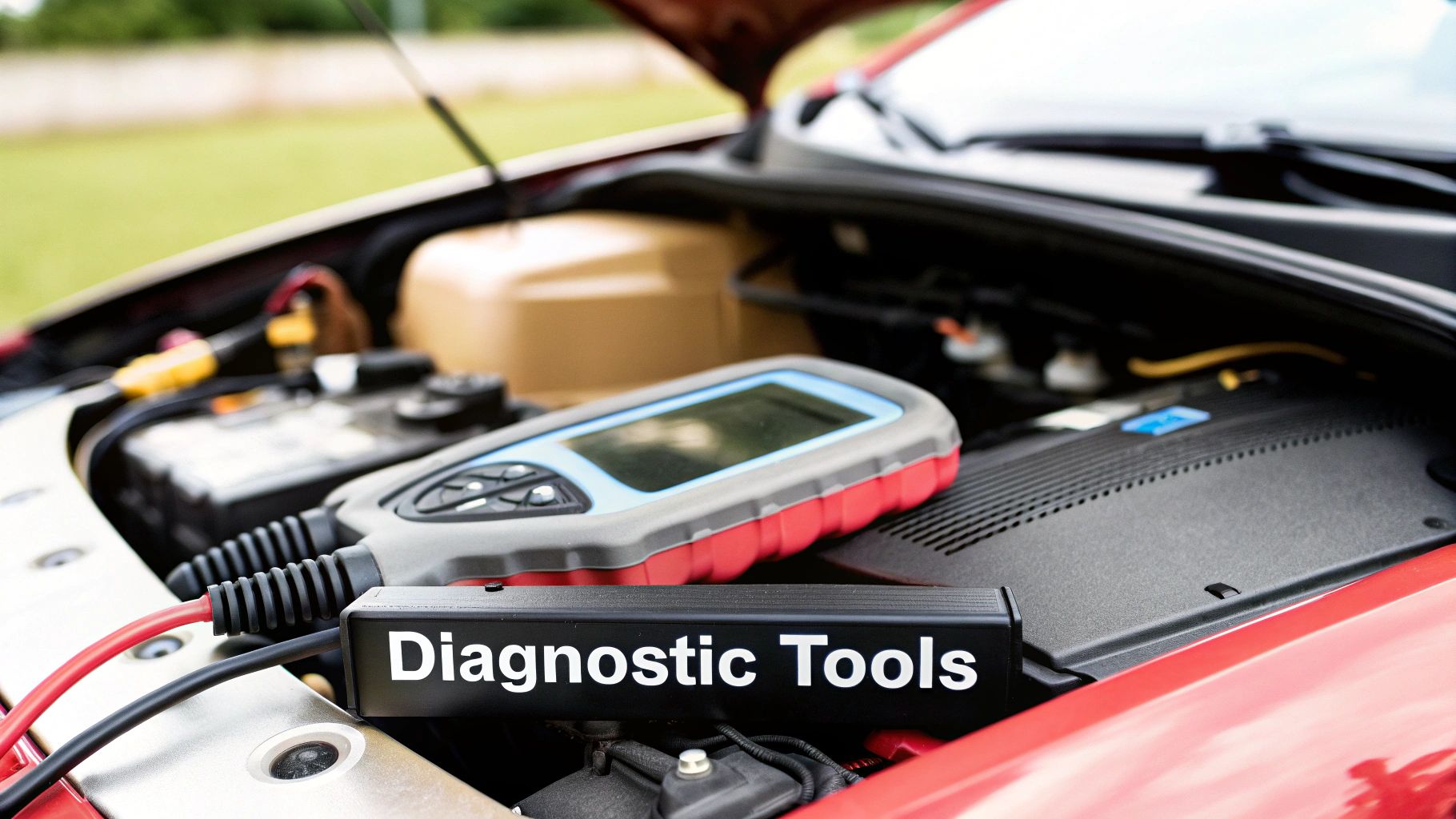
Your car’s dashboard is its way of talking to you. It uses a universal language of symbols to give you a real-time health report, and knowing what they mean can save you a lot of trouble down the road.
Think of these lights as an early warning system. Each one is tied to a sensor monitoring a part of your car, from the engine to the brakes. When a light comes on, it’s telling you that one of these sensors has picked up something that is not quite right.
The Infamous Check Engine Light
We’ve all seen it. That little engine-shaped light is probably the most common—and most confusing—warning of them all. It can mean anything from a loose fuel cap to a serious engine misfire, so how do you know how worried to be?
The key is to watch how it behaves.
A steady check engine light usually points to a less urgent fault. It’s a heads-up that something needs looking at, but you can typically keep driving to a garage. A flashing check engine light, is a different story. This signals a serious problem that could cause expensive damage, especially to your catalytic converter. If you see it flashing, the safest bet is to pull over and switch off the engine as soon as it's safe to do so.
The check engine light is your first clue that the car’s computer has logged a Diagnostic Trouble Code (DTC). This code is what our technicians use as a starting point for any professional car diagnostics in Sandy, pointing them straight to the problem area.
To help you get a better handle on what your dashboard is trying to tell you, here’s a quick rundown of the most common warning lights.
Common Dashboard Warning Lights Explained
Warning Light | System Affected | What It Could Mean | Recommended Action |
|---|---|---|---|
Engine Light | Engine Management | Loose fuel cap, faulty sensor, failing catalytic converter. | Steady: Get a diagnostic check soon. Flashing: Stop driving immediately and seek professional help. |
ABS Light | Anti-lock Brakes | Faulty wheel speed sensor, low brake fluid, or ABS module failure. | Your standard brakes will likely work, but get it checked. The anti-skid function is compromised. |
Airbag (SRS) Light | Airbag System | A fault in the airbag sensor, wiring, or control module. | Have it inspected immediately. Your airbags may not deploy in an accident. |
Battery Light | Charging System | Failing alternator, worn-out battery, or a broken drive belt. | The car is running on battery power alone. Get to a garage before you get stranded. |
Oil Pressure Light | Engine Lubrication | Low oil level or a failing oil pump. | CRITICAL. Stop the car immediately and check oil levels. Driving can cause severe engine damage. |
This table covers the big ones. Your owner's manual will have a full list specific to your make and model.
Key Safety System Warnings
Beyond the engine, your car keeps a close watch on its safety features. Ignoring these lights can put you at risk, so it’s wise to know what they mean.
Two of the most important ones are:
ABS Light: This tells you there's an issue with the Anti-lock Braking System. Your normal brakes should still work, but the system that stops your wheels from locking up and skidding during a hard stop might be out of action.
Airbag (SRS) Light: The Supplemental Restraint System (SRS) light is a serious one. It warns of a fault somewhere in the airbag system, which could mean they won't deploy properly in a collision.
Electrical System Alerts
Your car's electrical system has its own warning signs, too. These usually relate to the battery or alternator—the very things that get your car started and keep it running.
A battery warning light, which looks exactly like a little car battery, typically means the charging system has a problem. The cause could be anything from a dying alternator to a snapped belt. If this light is on, your car is running purely on battery power, and it’s only a matter of time before it conks out. Getting it checked quickly can be the difference between a simple repair and a tow truck.
Our Professional Diagnostic Process Explained
When a warning light pops up on your dash, figuring out what's wrong takes more than just plugging in a code reader. Proper diagnostics is a methodical process, a blend of advanced technology and old-fashioned know-how. Our approach to car diagnostics in Sandy is built on being thorough and precise, so we can move past the guesswork and find the real source of the problem.
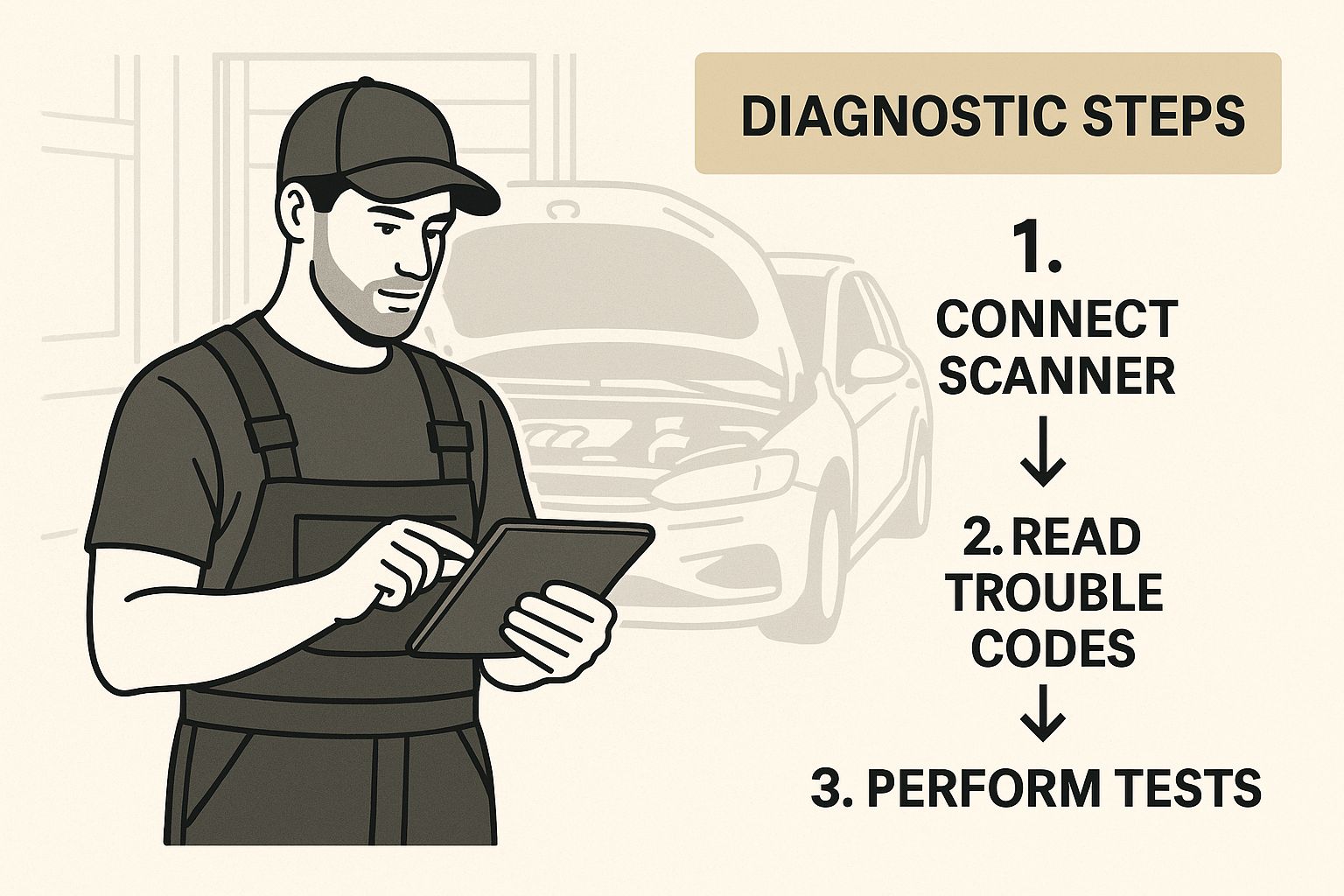
The first step is connecting our high-tech scanning tools to your car’s On-Board Diagnostics (OBD-II) port. This lets us pull any Diagnostic Trouble Codes (DTCs) that your vehicle’s computer has logged. Think of a DTC as the first clue in a detective story—it points us to the right part of the car, but it does not solve the mystery on its own.
A single code can have a dozen different causes. For example, a code flagging an issue with the air-fuel mixture could be anything from a failing sensor or a simple vacuum leak to a more complex fuel delivery or electrical fault. This is where a technician's expertise comes into play.
From Code Reading to Problem Solving
Our skilled technicians use that initial code as a starting point. We then look at the bigger picture, reviewing your car's specific make, model, age, and service history. All this context helps us narrow down the list of suspects and decide what to check next.
The investigation usually involves a few key steps:
Visual Inspections: A trained eye can spot a lot. We will carefully check all the components, wiring, and hoses connected to the system that flagged the error.
Component Testing: We might need to test individual parts, like sensors or actuators, to see if they're working as they should.
Circuit Analysis: Our team can examine the electrics to check for shorts, breaks in the wiring, or bad connections that might be sending a false signal.
This structured process helps us get the diagnosis right the first time, saving you time and money on unneeded repairs.
Analysing Live Vehicle Data
One of the most powerful tools we have is the ability to analyse live data streams straight from your car’s computer. This lets us watch what’s happening in real-time while the engine is running. By monitoring sensor readings, fuel adjustments, and other data points, we can spot subtle performance issues that a simple code won't reveal.
A professional diagnostic check is an active investigation, not just a passive scan. It’s about interpreting data, testing theories, and ruling out possibilities one by one until the true fault is found.
The technology for this job is always advancing. The global market for automotive diagnostic scan tools is set to grow from USD 40.51 billion to USD 42.64 billion, a trend driven by the increasing complexity of modern cars. Here in the UK, the rise of electric and hybrid vehicles adds another layer of diagnostic challenges.
That’s why we invest in top-tier equipment, like the gear we use for our Bosch vehicle diagnostics. It means we’re ready to handle whatever your car throws at us. You can learn more about what Bosch vehicle diagnostics are and why they matter in our detailed guide. This comprehensive approach gives you confidence, taking the mystery out of the repair and showing you the skill that goes into getting it right.
The Risks of Reaching for a DIY Code Reader
When a warning light suddenly appears on your dashboard, the temptation to grab a cheap DIY code reader is understandable. These little gadgets are everywhere, and they promise a quick, affordable fix. But while they can pull a basic Diagnostic Trouble Code (DTC), relying on them can often lead you down a frustrating and expensive rabbit hole.
Think of a consumer-grade code reader as getting just one piece of a much larger puzzle. It gives you a generic code—a symptom, really—but offers no insight into the actual diagnosis. For example, the reader might flash a code for an oxygen sensor fault. So, you go out, buy a new sensor, and fit it. A few days later, the light is back on. Sound familiar?
The Trouble with Generic Codes
Here’s the catch: a single trouble code rarely points to just one specific problem. That oxygen sensor code, for instance, might not mean the sensor itself is bad at all. A basic reader cannot see the bigger picture, which could include any number of underlying issues.
The real culprit could be something else entirely, like:
A hidden vacuum leak somewhere in the engine.
A problem with the fuel pressure regulator.
Wiring to the sensor that’s become damaged or corroded.
A fault with one of the fuel injectors.
Without the proper equipment to test these related systems, you’re just guessing. This is how people end up in that classic, wallet-draining cycle of replacing part after part, while the root cause of the problem remains completely untouched.
A DIY code reader can tell you where the car thinks it hurts, but it cannot tell you why. Professional diagnostic equipment is what lets a technician see the full story, analyse live data, and get to the true source of the fault.
Professional Tools vs. DIY Gadgets
The professional diagnostic scanners we use for car diagnostics in Sandy are in a completely different league from those off-the-shelf readers. These are sophisticated systems that do far more than just spit out a code; they talk to every control module in your vehicle.
Our technicians can tap into live data streams, see a "freeze-frame" snapshot of exactly what your car was doing the moment a fault occurred, and even run active tests to command specific components to turn on or off.
It’s this level of detail that allows a skilled technician to diagnose a problem with precision. A professional diagnostic service does not just save you from buying parts you do not need—it protects your car from the potential damage an unaddressed issue could cause. Instead of taking a punt on a generic code, you get a clear, definitive answer and a direct path to the right repair.
The Pay-Offs of a Swift and Accurate Diagnosis

Let's be honest, seeing a warning light pop up on your dashboard can be a bit of a gamble. Do you ignore it and hope it goes away, or do you get it checked out? Getting a proper diagnostic check is always the smart bet, and here’s why. The biggest win is catching a small problem before it snowballs into a massive, wallet-emptying disaster.
Think about it: a faulty sensor that costs a few quid to replace today could lead to a wrecked catalytic converter tomorrow. By getting to the bottom of the issue early, a professional car diagnostics service in Sandy saves you a world of pain and expense down the line. It is all about being proactive.
Beyond dodging those huge repair bills, accurate diagnostics have a real impact on how your car drives every day. When your engine is running just as it should—with no sensor glitches or fuel system gremlins—it performs better and sips fuel more efficiently. That means a smoother ride and fewer stops at the pump.
A Safer Car and a Better Resale Price
Plenty of those diagnostic trouble codes are directly linked to your car's safety systems. A proper check makes certain that features like your ABS and airbags are working perfectly, giving you total peace of mind when you're on the road with your family. A fault in one of these systems is not something you can spot just by looking.
It's also a simple fact that a well-looked-after car with a solid service history will always fetch a better price when you sell it. A documented history of professional diagnostic checks proves to any potential buyer that you've taken proper care of the vehicle. It builds trust and can seriously boost its value.
A diagnostic report is a health certificate for your car. It tells us what needs fixing now and builds a long-term record of care, proving the car is reliable.
If you're looking to keep on top of maintenance without breaking the bank, we've put together some great advice on cost-effective car repairs for 2025.
Keeping Up with Today's Car Tech
Cars are getting smarter every year, and diagnostics are evolving right along with them. Modern vehicles are packed with technology that communicates data in real time, and remote diagnostics is becoming a major development. This lets us monitor a car's health proactively, keeping it on the road for longer.
The global market for this technology was valued at USD 17.0 billion and is expected to rocket to USD 78.1 billion by 2035. It just goes to show how professional diagnostics have become for managing the complex health of the advanced cars we drive today.
Your Car Diagnostics Questions Answered
Car diagnostics can feel like a bit of a mystery. We get it. To help clear things up, here are some straight-talking answers to the questions we hear most often from drivers here in Sandy.
How Long Does a Car Diagnostic Test Actually Take?
Getting the initial codes from your car’s computer is the quick part – that only takes a few minutes. But that's just the start of the story.
Think of that code as a clue, not the final answer. Our job is to take that clue and do some proper detective work. This deeper investigation, where we figure out precisely what’s wrong, can take anywhere from 30 minutes to a couple of hours. It all comes down to how tricky the problem is, but we will always keep you in the loop.
Does the Test Tell You Exactly Which Part Is Broken?
That’s a common misconception. A diagnostic code does not simply say "replace part X." Instead, it points our technicians in the right direction, highlighting which system is having a problem.
For instance, a code flagging an engine misfire could mean a few things are at play:
A worn-out spark plug
A faulty ignition coil
A blocked fuel injector
Even a simple wiring problem
Our technicians use that code as a signpost. From there, they run further tests to uncover the root cause. This approach saves you money by making sure we only replace the parts that are genuinely at fault.
Is It Safe to Drive with the Check Engine Light On?
The answer is based on what the light is doing. If it's on and holding steady, and the car feels fine to drive, you should get it booked in for a check as soon as you can. Do not ignore it.
A flashing check engine light is a much bigger deal. This indicates a serious issue that needs immediate attention, like unburnt fuel getting into the exhaust. Driving could cause expensive damage to your engine or catalytic converter. If that light starts flashing, or if you notice a loss of power, hear strange noises, or see smoke, pull over safely and turn the engine off.
What’s the Cost for Car Diagnostics in Sandy?
When you pay for a diagnostic check, you're paying for a technician's expertise and our investment in advanced diagnostic tools. The final cost often depends on how complex the fault is to trace.
Here at Krause Autos, we're all about being upfront. Our initial fee covers the investigation to find the problem. Once we've pinpointed the issue, we'll give you a full report explaining what we've found, along with a clear, no-obligation quote for any repairs. We will not do any further work until you give us the go-ahead. To get a head start on potential issues, check out our guide on how to spot early signs your car needs a professional diagnostic check in Sandy.
For an honest, thorough approach to car maintenance, you can trust Krause Autos. Book your diagnostic check with our expert team today, and let's get to the bottom of it. https://www.krauseautos.co.uk


Comments