


When to Replace Brake pads for UK Drivers
One of the most common questions we get from drivers is, "How often should I change my brake pads?" While there's a general rule suggesting they last between 25,000 and 70,000 miles, that huge range tells you one thing: mileage isn't the whole story.
How you drive and what you drive are far more important clues.
When Should I Think About Replacing My Brake pads?
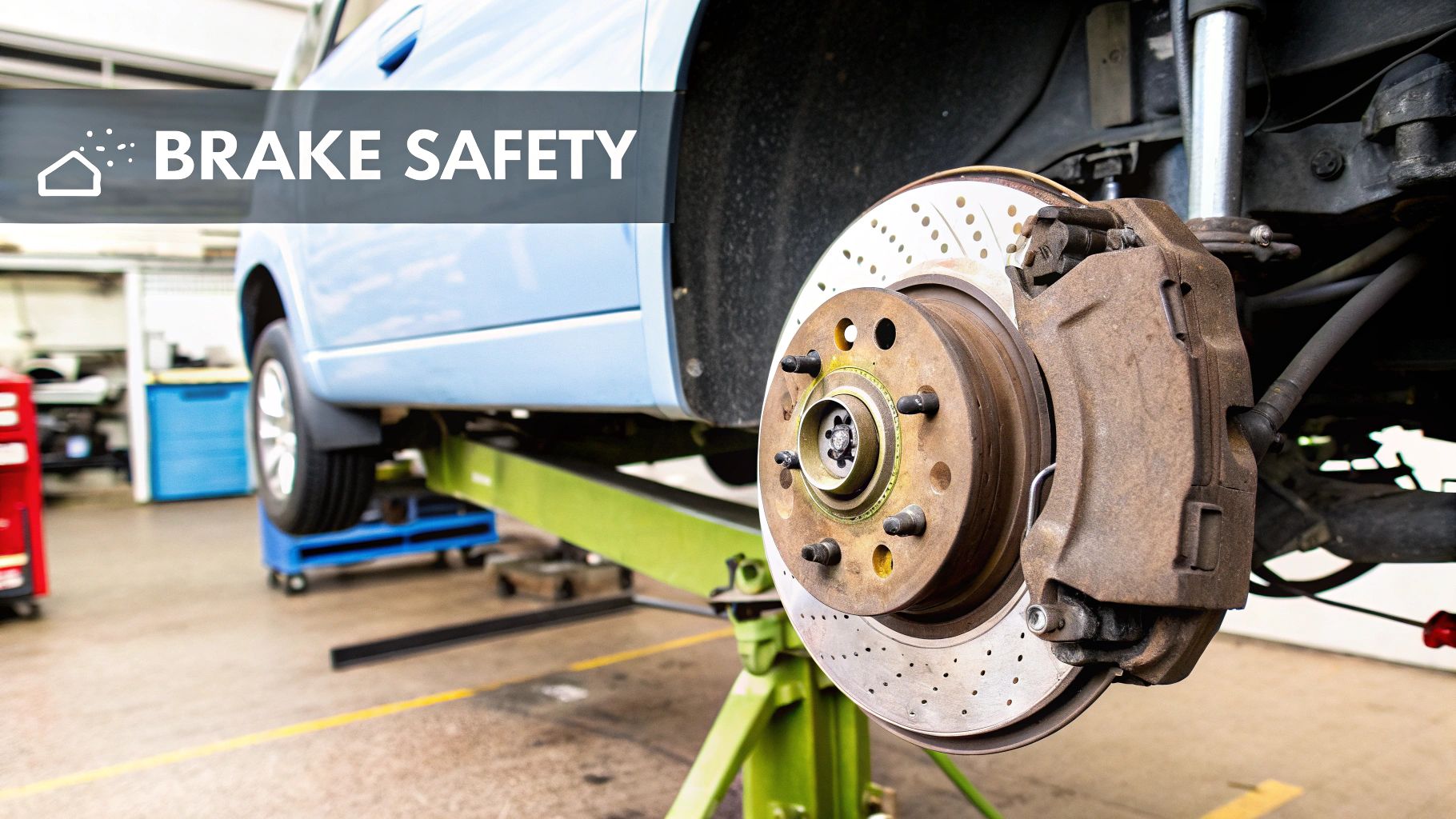
Pinpointing the exact lifespan of your brake pads is tricky because every driver’s habits are unique. A car that spends its life cruising on the motorway will be much kinder to its brakes than one that is constantly stopping and starting in city traffic.
The analogy of running shoes is a great way to think about it. Someone running long, steady distances on a soft track will wear out their soles differently than a basketball player who is constantly sprinting, stopping, and pivoting on a hard court. Your driving style has that same direct impact on your brake pads.
What Wears Brake pads Down Faster?
Understanding the main culprits behind brake pad wear can help you get a better feel for when a replacement might be on the horizon. It really boils down to a few key things:
Your Daily Commute: Stop-start city driving is the enemy of brake pad longevity. Constant braking wears them down much faster than cruising on open roads.
The Weight of Your Car: It takes more energy to stop a heavier vehicle. SUVs, vans, and loaded-up estate cars naturally put more strain on the entire braking system.
The pads Themselves: Brake pads come in different materials—organic, semi-metallic, and ceramic—and each has a different balance of performance, noise, and durability.
Mileage alone is a poor guide for brake replacement. The best way to know for certain is to listen to your car and look for the tell-tale signs that your pads are getting low.
This guide will cover all the audible squeals, visual cues, and performance changes that scream, "It's time for a check-up!" When you notice them, it's the perfect time to pop into Krause Autos for a professional inspection and keep your car stopping safely.
Learning the Telltale Signs of Worn Brake pads
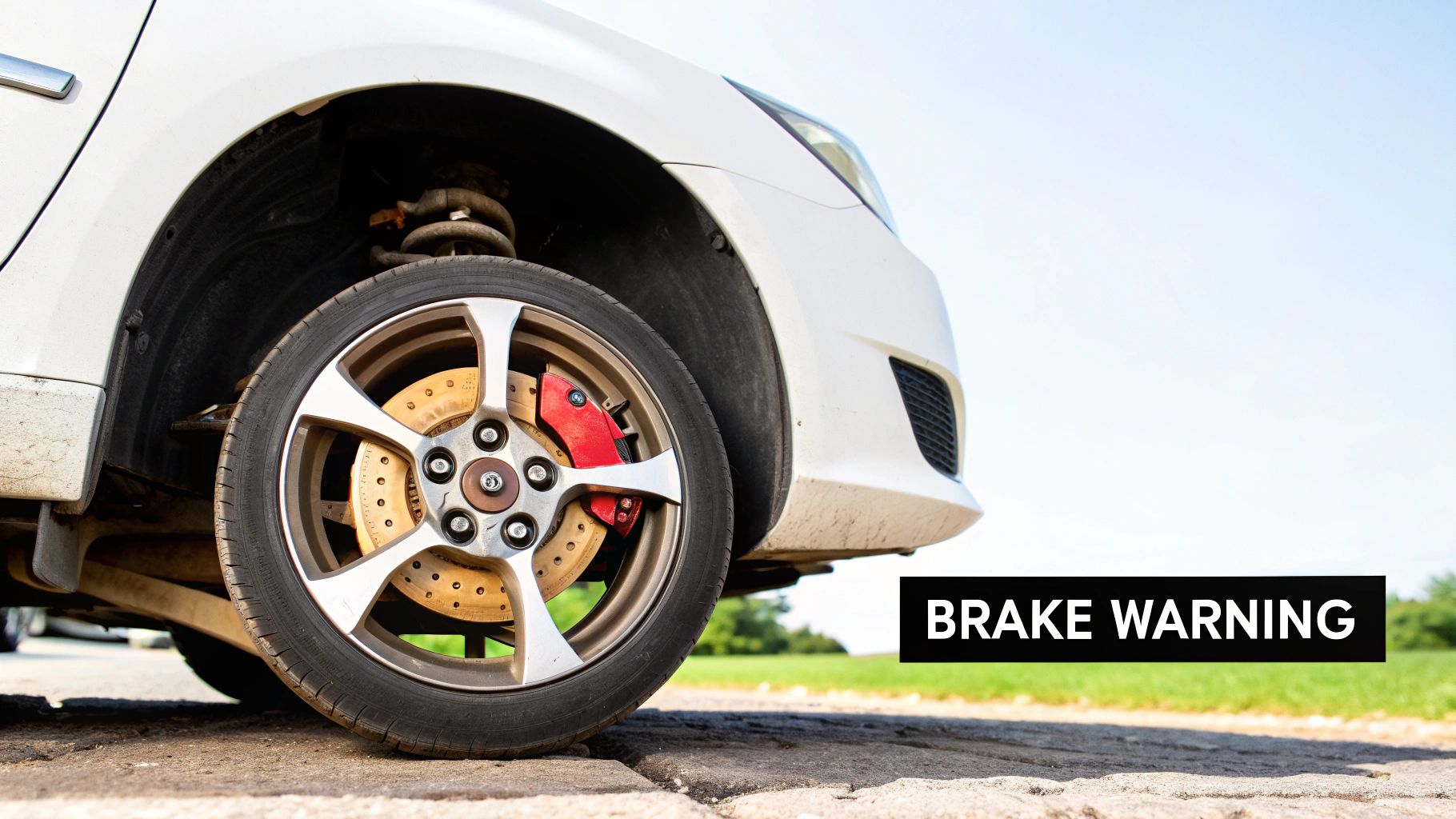
Spotting worn brake pads often comes down to simply listening to your car and feeling how it drives. Modern vehicles are pretty good at telling you when something’s wrong, and the braking system isn't shy about making its problems known. These warning signs are your first heads-up that a trip to the garage is in order.
Learning to recognise them puts you in the driver's seat, literally. The key is to trust your senses and act as soon as you notice something feels or sounds different.
Sounds to Listen For
The classic sign is a high-pitched squealing noise that pops up whenever you press the brake pedal. This isn't just a random sound; it is often a purpose-built warning. Most brake pads have a tiny metal tab called a wear indicator. When the pad material gets thin, this tab scrapes against the brake disc, creating that unmistakable shriek to tell you it's time for a change.
If you hear a much harsher grinding or growling noise, that’s a more urgent problem. This usually means the pads are completely worn out, and you have metal grinding on metal – the pad’s backing plate against the brake disc. This is a critical warning, and you need to get it checked immediately to prevent serious and expensive damage. If you want to know more, we have a guide on what that squealing sound means for your brakes.
Sensations You Might Feel
It's not just about what you hear; you can often feel when your brake pads are on their way out. Do you notice a new vibration or a pulsating feeling through the brake pedal when you slow down? Sometimes you can even feel it in the steering wheel. This is often called "brake judder" and can be a sign that your brake discs are warped, which can happen when you have been driving with worn pads for too long.
Another giveaway is how the brake pedal itself feels. If it seems "spongy" or sinks closer to the floor than it used to, this could point to worn-out pads or a problem with the brake fluid system.
UK car maintenance experts advise that signs like loud squeaking, reduced braking performance, or excessive vibration indicate it is time for a professional check. They suggest inspecting brake pads at least once a year or every 10,000 miles.
What to Look For
A quick visual check can also give you a clue. If you can peek through the spokes of your wheels, you should see the brake pad pressed up against the shiny metal disc. A new pad is usually around 8-12mm thick. If you can see that yours looks thinner than 3mm, it’s definitely time to get them replaced.
You might also notice a lot more dark, sooty dust on your wheels than usual. While a little brake dust is perfectly normal, a sudden increase can be a sign that the pads are wearing down much faster than they should be, telling you it’s time for a proper inspection.
What Affects How Long Your Brake pads Last?
There’s no single, straightforward answer to how long a set of brake pads should last. Think of it less like an expiry date and more like the tread on a pair of running shoes – how quickly they wear down depends entirely on how and where you use them. Understanding the key factors can give you a much better idea of what to expect from your own vehicle.
Your daily commute is probably the biggest influence. Driving in a busy city centre, with its endless stop-start traffic and traffic lights, is tough on brakes. Every stop grinds away a tiny bit of the pad. Compare that to cruising down the motorway, where you might go for miles without touching the brake pedal, and you can see why city drivers often need replacements far sooner.
Your Driving Habits and Vehicle's Weight
How you drive matters, a lot. If you are the type of driver who tends to brake late and hard, you are creating a massive amount of heat and friction. That is what wears pads out, plain and simple. A more defensive driver, who anticipates stops and coasts to slow down, will find their brake pads last significantly longer.
The sheer size and weight of your vehicle also play a crucial role. A heavier car, like an SUV or a loaded van, carries more momentum and needs a lot more force to bring it to a halt. This extra work puts a greater strain on the entire braking system, especially the pads, causing them to wear down faster than they would on a small, lightweight hatchback.
The Stuff They're Made Of
Not all brake pads are created equal. The material they're made from has a huge impact on their performance, noise levels, and lifespan.
Organic pads: These are made from a mix of non-metallic materials. They are generally quiet and kind to your brake discs but are often the quickest to wear out.
Metallic pads: As the name suggests, these contain metal fibres. They offer excellent stopping power and are very durable, but the trade-off can be more noise and faster wear on the discs themselves.
Ceramic pads: Often seen as the premium choice, ceramic pads provide a great balance. They are quiet, produce very little dust, and last a long time, though they usually come with a higher price tag.
The table below gives a quick summary of how these different factors can influence the lifespan of your brake pads.
Brake Pad Wear Influences
Factor | Impact on Brake Pad Lifespan |
|---|---|
Driving Environment | Frequent city driving with stop-start traffic causes rapid wear. |
Driving Style | Aggressive, late braking significantly shortens pad life. |
Vehicle Weight | Heavier vehicles require more braking force, accelerating wear. |
Brake Pad Material | Organic pads wear fastest; ceramic pads typically last the longest. |
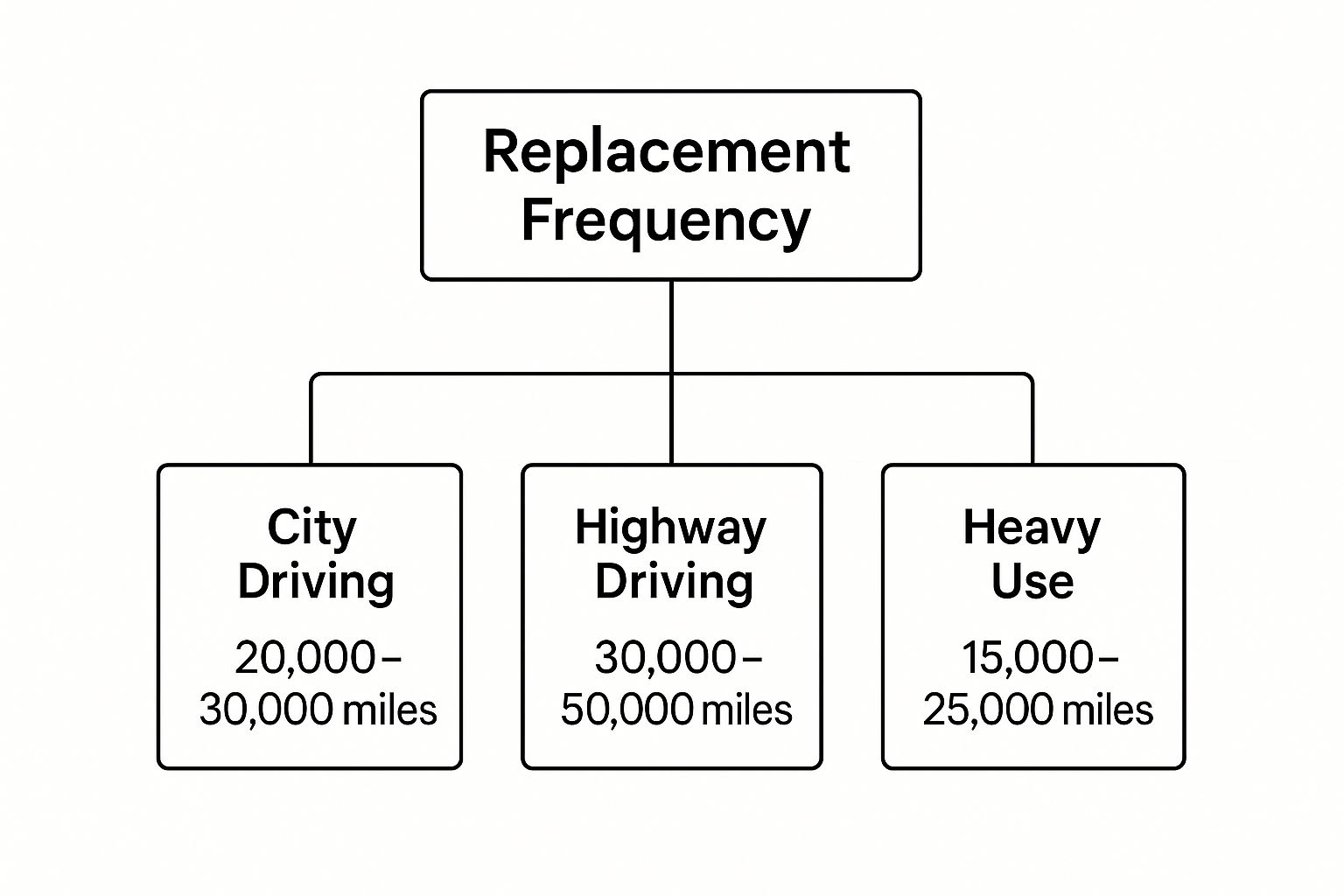
As you can see, your driving environment can make a massive difference. While a typical guideline for brake pad replacement in the UK is anywhere from 20,000 to 70,000 miles, your personal experience will land somewhere in that wide range based on these factors. Keeping an eye on all parts of your car is key, which is why our guide on when to replace your car tyres is another useful read.
So, How Many Miles Should My Brake pads Last?
Ask any mechanic, and you'll likely get a broad answer: somewhere between 25,000 and 70,000 miles. That’s a huge window, and for good reason. Relying purely on the number on your odometer is a bit like guessing the weather—it doesn't tell the whole story.
The simple truth is that mileage is just a guideline, not a hard-and-fast rule. How and where you drive has a much bigger impact on your brake pads than the total distance you have covered.
Think about it. A delivery van making constant stops and starts in busy Bedford traffic is hitting the brakes far more often than a car that spends its life cruising up and down the A1. Even if they both clock up the same mileage, the van's pads will be working overtime and will almost certainly wear out faster.
Mileage is a Guide, Not Gospel
UK roads are a mixed bag, aren't they? From the stop-go crawl of a city commute to navigating the winding country lanes of Bedfordshire, every journey is different. A driver who regularly tackles steep hills will put different stresses on their brakes compared to someone who sticks to flat, open motorways.
This is why the physical signs we have talked about—the noises, the feel of the pedal—are always a more reliable signal than your mileage.
Your car itself also plays a huge part. We have seen some vehicles come into the garage needing new pads at just 15,500 miles, while others sail past 50,000 miles with no trouble. Factors like the car's weight, the type of braking system it uses, and your personal driving habits all come into play. If you are curious about how UK road conditions affect brake wear, this guide from AutoInspire has some great insights.
There is really no substitute for a professional eye. During your annual MOT or a regular service, a trained technician can spot the early signs of trouble, like uneven wear, which is something a simple mileage check would never reveal.
So, what’s the takeaway? Use mileage as a helpful nudge. Once you start hitting that 25,000-mile mark, it's a good reminder to pay closer attention to how your brakes sound and feel. But always trust the physical signs over the numbers.
What a Professional Brake Inspection Involves
If you think something’s not right with your brakes, bringing your car to a professional garage like ours is the surest way to get a clear and accurate diagnosis. A technician's eye can spot things you might miss, giving you the real picture of your brake system’s health without any of the guesswork. It is a methodical process, designed to catch any potential problems.
It all starts with getting your vehicle securely up on a lift. This gives the technician full, clear access to the wheels and all the braking components tucked away behind them. Once the wheels are off, we can get a proper look at the callipers, brake pads, and discs (you might also hear them called rotors).
The Inspection Step-by-Step
First, the technician will do a thorough visual check, looking for any obvious signs of wear and tear or damage. They'll examine the surface of the brake discs for deep grooves, scoring, or any bluish tints that signal overheating. After that, they will get down to the crucial measurements.
One of the most important checks is measuring the thickness of the brake pads. A brand new pad is typically around 10-12mm thick. Once they wear down to 3mm, it’s time for a replacement – that’s pretty much the minimum safe limit.
This single measurement tells us exactly how much life your pads have left.
The inspection doesn't stop there. We will also check your brake fluid level and condition, because old or contaminated fluid can seriously compromise your stopping power. Finally, the technician will look for leaks in the brake lines and make certain the callipers are moving freely and working as they should.
For a more detailed breakdown of all the parts involved, our car owner’s guide to brake repairs in Sandy is a great resource.
Your Top Brake Pad Questions Answered
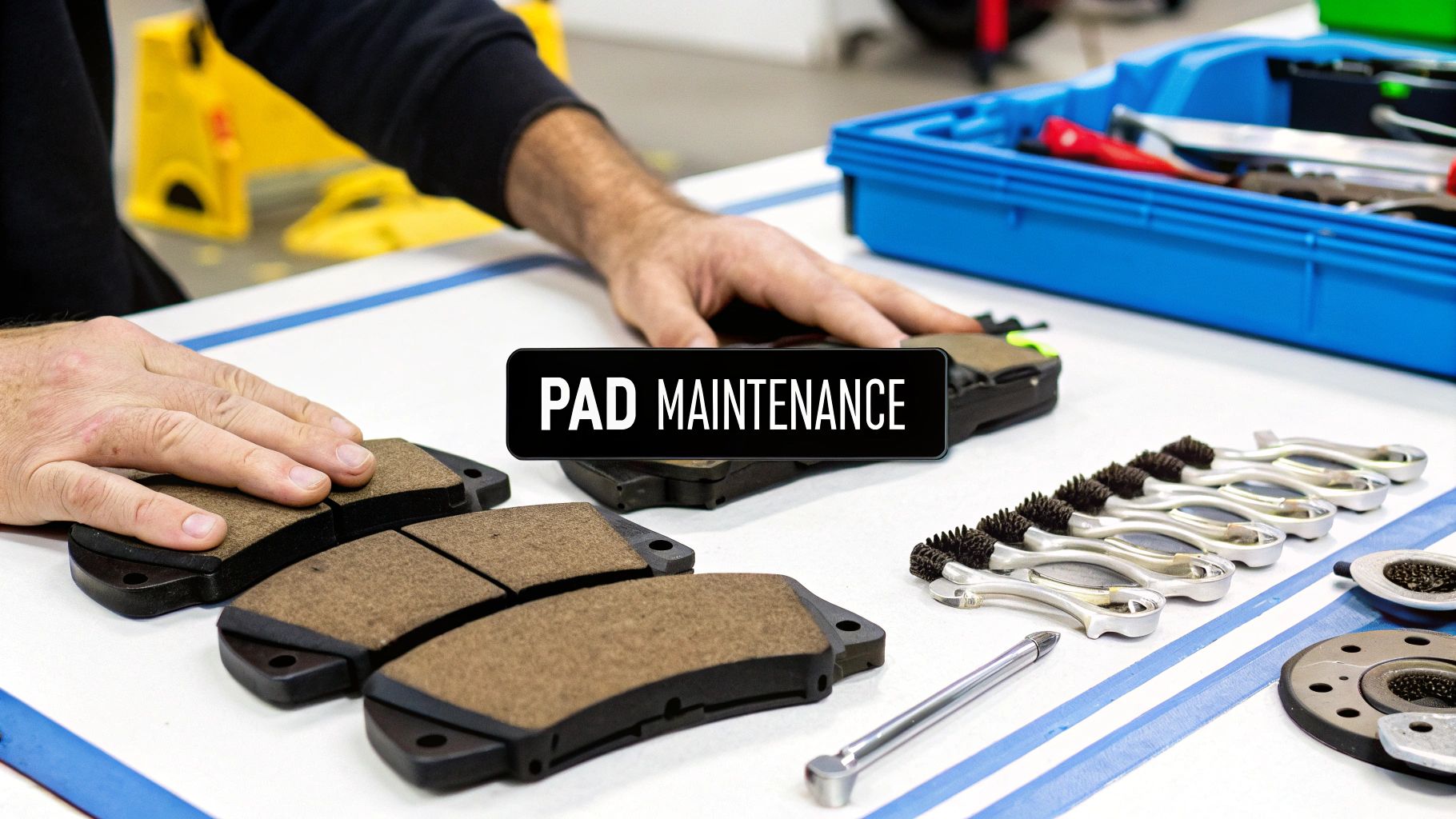
Even after covering the warning signs, it is natural to have a few more questions buzzing around. Let's clear up some of the most common things we get asked by drivers who come through our doors.
How Much Should I Expect to Pay for a Brake Pad Replacement in the UK?
The cost can be a bit of a moving target, but for an average family car, you are generally looking at a range between £80 and £250 per axle. What causes such a spread? Well, a few things come into play.
Your car’s make and model are big factors; performance or premium vehicles often demand pricier, specialised parts. The type of pads you opt for matters too—ceramic pads, for instance, are usually more expensive than their standard metallic counterparts. Finally, the garage's labour rate will influence the total on your bill.
Can I Get Away With Just Replacing the pads and Not the Discs?
Technically, yes, you can replace just the pads. But it's not always the best idea. Think of your brake pads and discs as a pair that work together. For your new pads to grip effectively, they need a perfectly smooth, flat surface to press against.
Putting fresh pads on old, worn, or grooved discs is a recipe for trouble. It can cause the new pads to wear down unevenly, reduce your stopping power, and create all sorts of squeaks and judders. An experienced technician will always measure the disc's thickness and check its condition before giving you the best advice.
Why Do My Front Brakes Wear Out Quicker Than the Rears?
It's not your imagination—your front brake pads almost always wear out faster. This is completely normal and actually part of your car's design. When you hit the brake pedal, the momentum and weight of the car shifts forward, putting immense pressure on the front wheels.
Because of this, the front brakes are engineered to do the lion's share of the work, handling around 60-70% of the total stopping force. More work means more wear. It is just one of the many details that highlight why regular car service matters in 2025.
If you have spotted any of these warning signs, or you would just like the reassurance of a professional eye, get in touch with Krause Autos today. Our expert technicians in Sandy are here to give you honest advice and top-quality service, making sure you stay safe on the road. Book your brake check with us now at https://www.krauseautos.co.uk.


Comments