


How to Check Power Steering Fluid A UK Guide
Ever heard a faint whine when you turn the wheel? Or maybe noticed the steering feels a bit heavy when you're trying to park? Those aren't just quirks; they're often the first signs your car is trying to tell you something's up with the power steering fluid.
This hydraulic fluid is what makes turning the wheel feel so effortless. Keeping an eye on it is a simple but important part of basic car care, and ignoring it is asking for trouble.
Why Checking Your Power Steering Fluid Matters
Letting your power steering fluid run low or get old and dirty is a fast track to a noisy pump, stiff steering, and some genuinely expensive repairs. Think of it as the lifeblood of your steering system. Its job is to lubricate and cool all the moving parts, and when it can't do that properly, things start to go wrong.
Imagine you're navigating a tight multi-storey car park. You hear that whining noise every time you make a sharp turn into a bay. A quick look under the bonnet shows the fluid is dangerously low. By simply topping it up, you've just saved the power steering pump from running dry and burning out. It’s a small check, but it's a cornerstone of any good vehicle maintenance checklist.
The Financial Cost of Neglect
Being proactive here isn't just about keeping your car happy; it's about saving yourself a lot of cash. Here in the UK, letting this simple task slide can be a costly mistake.
If the pump fails, you could be looking at a bill of £150 to £500 just for the part. Add in new seals and labour costs, and you can easily sail past the £1000 mark. It's a massive expense that's often completely avoidable.
A five-minute fluid check can be the difference between a simple top-up and a four-figure repair bill. It's one of the most cost-effective bits of car care you can do yourself.
Protecting Your Car's Health
It's not just about the pump, either. Old, contaminated fluid causes long-term damage to the entire steering rack. Over time, the fluid picks up tiny metal shavings and other debris, slowly turning from a clean liquid into an abrasive sludge.
This gritty fluid grinds away at seals and other internal components, which leads to leaks and total system failure. A quick look at the fluid's colour and condition can tell you a surprising amount about the health of your steering system, helping you spot big problems while they're still small.
Getting Started: What to Do Before Opening the Bonnet

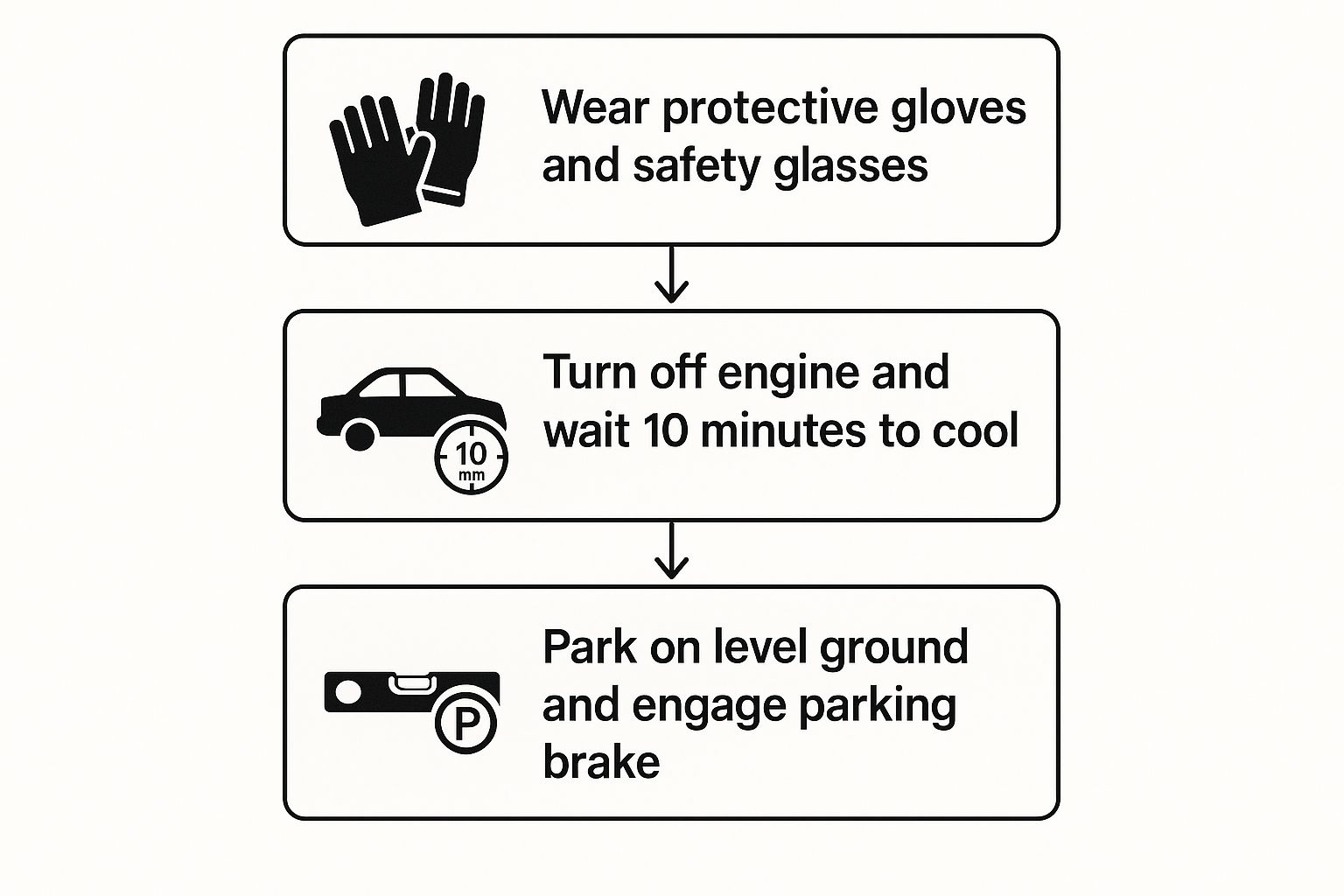
Before you even pop the bonnet to check your power steering fluid, a little prep work goes a long way. Getting the basics right from the start makes the job safe and your reading spot-on, helping you avoid some common pitfalls.
First, your car must be parked on completely level ground. If you check the fluid on a slope, you'll get a false reading – the dipstick might show the level as higher or lower than it truly is. It's a small detail, but it's critical for accuracy.
Next, think about the engine temperature. While some owner's manuals suggest checking the fluid when the engine is hot, it’s always much safer to work on a cold engine. If you've just been for a drive, let it cool down for at least an hour. This will prevent any nasty burns from touching hot components under the bonnet.
Your Simple Toolkit for the Job
You don't need a professional garage's worth of equipment for this task, but having a few key items to hand will make the whole process cleaner and much easier.
Here’s a quick list of what you should grab before you start:
A clean, lint-free cloth: This is needed for wiping the dipstick clean. You don’t want any fluff or dirt getting into the system where it can cause damage.
A small funnel: If you think you might need to top up the fluid, a funnel is your best friend. It helps you pour accurately and prevents spills, which can be messy and harmful to other parts.
Your car’s owner’s manual: Think of this as your guide. It will tell you exactly where to find the power steering reservoir and, crucially, what specific type of fluid your car needs.
Taking the time to prepare properly is a core part of our complete car servicing checklist. It's all about building good habits to make certain every check is performed safely and correctly.
Grabbing the manual isn't just a suggestion—it's the only way to be 100% certain you're using the right fluid. The wrong type can cause serious, and expensive, damage to your steering system. Once you've got these bits ready, you can get started with confidence.
Finding and Reading the Power Steering Reservoir
With the car prepped and ready, it's time to pop the bonnet and find the power steering reservoir. You'll usually spot this little container tucked away on one side of the engine bay, often near the engine belts. Most are made from translucent plastic with a black or brightly coloured cap.
The easiest way to identify it is by looking at the cap. Many will have a small steering wheel icon or simply say "Power Steering Fluid" right on top, so you can be sure you've got the right one.
How to Get an Accurate Fluid Reading
Before you even think about unscrewing the cap, give it a good wipe with a clean, lint-free cloth. Clean the whole area around it too. This is a crucial little step that stops any dirt or grit from dropping into the reservoir and contaminating the system. You’d be surprised how much damage a tiny bit of debris can cause.
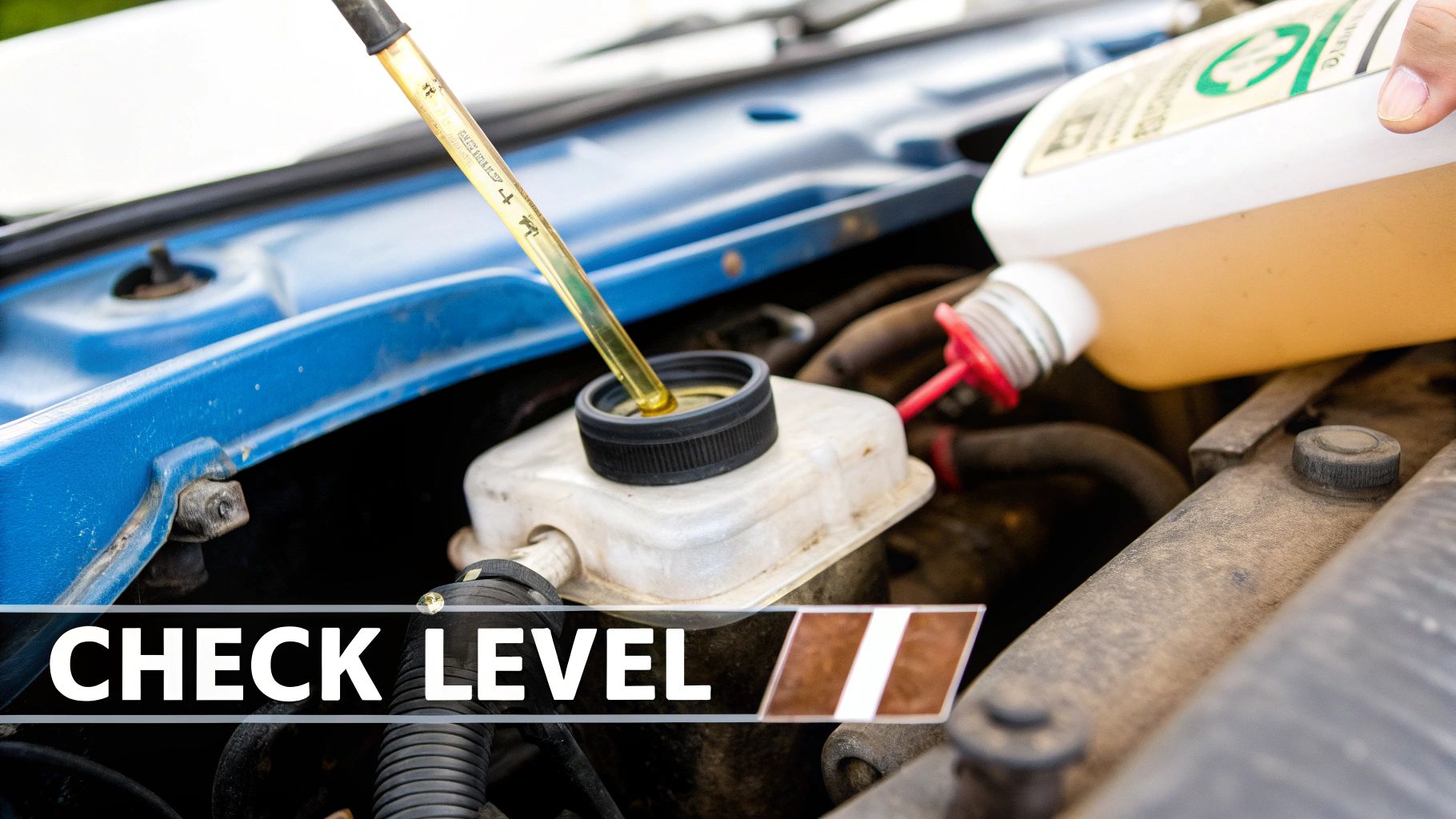
With the cap clean, go ahead and twist it off. Most have a dipstick built right in. Pull it out, wipe it completely clean with your cloth, then pop it back in, making certain it's fully seated. Now, pull it out one more time for a true, accurate reading.
A little tip from experience: if the fluid is really clean or the light in your garage isn't great, it can be tough to see the level. I find that tilting the dipstick slightly helps the fluid catch the light, making it much easier to spot against the markings.
Understanding the Dipstick Markings
Take a close look at the dipstick – you’ll notice it has markings to guide you. Typically, you'll see two different ranges: one for ‘HOT’ and another for ‘COLD’. Which one you use depends entirely on whether the engine is warm or not.
COLD reading: This is the one to use if the car hasn't been driven for a few hours and the engine is cool to the touch.
HOT reading: Use this if you've just been for a drive and the engine is at its normal operating temperature.
Your fluid level should sit comfortably between the 'MIN' and 'MAX' lines for the correct temperature range. If you’re checking a cold engine, for example, the level should fall within the COLD marks. If it’s below the minimum line, you need to top it up.
Choosing and Adding the Right Fluid
So, you've spotted that your power steering fluid is low. The next step is to top it up, but hold on a moment—grabbing just any bottle off the shelf is a guaranteed way to cause expensive problems.
Using the wrong fluid can wreak havoc on your steering system. Think of it like putting diesel in a petrol car. The seals and internal parts are designed for a very specific chemical formula, and the wrong stuff can lead to leaks, damage, and system failure.
Finding the Right Fluid for Your Car
Your first port of call should always be the car's owner's manual. It's the guide for your vehicle and will tell you exactly what type of fluid you need. This might be a dedicated power steering fluid or, especially in some older cars, a specific type of Automatic Transmission Fluid (ATF).
Never guess or mix different fluids. Their chemistries can react badly, creating a sludge that will do more harm than good. If you can’t find your manual, a quick phone call to your local dealership parts department with your registration number will get you the right answer.
Understanding the Different Types
There’s no universal power steering fluid, as manufacturers tune their systems for specific fluid properties. You'll typically come across a few main categories:
Mineral-Based Fluids: These are the old-school hydraulic fluids, generally found in older vehicles.
Synthetic Fluids: Engineered for modern cars. They perform much better across a wide range of temperatures and last a lot longer.
ATF: As mentioned, some manufacturers, particularly in decades past, designed their power steering systems to run on certain types of automatic transmission fluid.
A modern Ford, for example, will almost certainly need a specific synthetic fluid, whereas an older Honda might require a particular grade of ATF. Always, always double-check.
How to Top Up Without Overdoing It
Topping up the fluid is simple, but you need a gentle touch to avoid overfilling. If you put too much in, the fluid will expand as it heats up during driving. This builds up pressure in the reservoir and can blow out the seals, causing the very leaks you're trying to prevent.
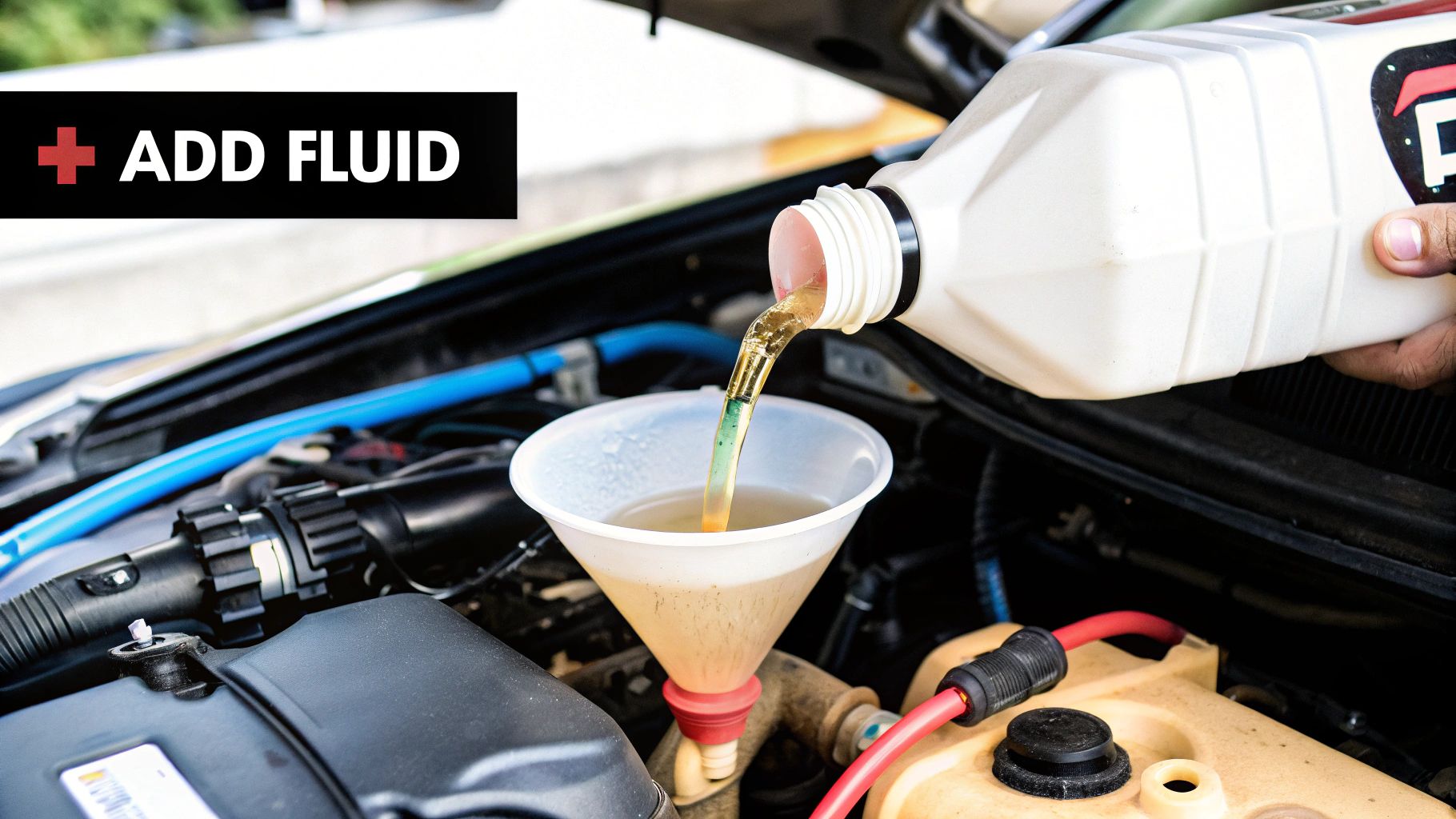
First, grab a clean, small funnel and pop it into the reservoir opening. Pour the correct fluid in slowly. Don't just glug it in. Add a little bit at a time, then pull the funnel out and check the level with the dipstick.
Your aim is to bring the level up to the ‘MAX’ mark for the correct temperature (either HOT or COLD), but not a drop over.
This quick check and top-up is one of the easiest bits of preventative maintenance you can do. Keeping an eye on your power steering fluid every six months or so can help you swerve expensive repairs down the line.
This simple task is a core part of keeping your vehicle healthy. For a more comprehensive look at routine upkeep, have a look at our guide which explains what every UK driver needs for https://www.krauseautos.co.uk/post/car-servicing-explained-what-every-uk-driver-needs-in-2025.
Recognising Problems That Need a Mechanic
Sometimes, topping up your power steering fluid is just a temporary plaster on a bigger wound. If you find yourself reaching for the bottle every few weeks, that’s a dead giveaway you’ve got a leak somewhere in the system. It might not be a dramatic puddle on your drive, but even a slow, sneaky leak will cause that level to drop consistently.
When the fluid level is always low, the power steering pump is being starved of the lubrication it desperately needs. This leads to accelerated wear and, eventually, complete failure. In my experience, this is the root cause of most steering problems that a simple top-up just won't fix.
Warning Signs You Shouldn't Ignore
Your car is pretty good at telling you when something is seriously wrong. Learning to listen to these signals can be the difference between a small repair bill and a massive one.
Keep an eye (and an ear) out for these classic symptoms that mean it’s time to call the garage:
A groaning or whining noise when you turn the wheel. If the sound gets louder as you turn, that’s often the sound of a struggling power steering pump.
Stiff or heavy steering. If turning the wheel suddenly feels like a workout, the system isn't delivering the hydraulic help it’s supposed to.
Fluid spots on the ground. Have a look under the front of your car for any reddish or brown patches on your parking spot.
Spotting these issues early is key. A small leak in a hose is a relatively simple fix, but leaving it can destroy the entire steering rack, turning a minor job into a major expense.
When a Visual Check Confirms a Deeper Problem
The state of the fluid itself can tell you a lot. Pull out the dipstick and take a good look. If the fluid is dark brown or black, or if it has a thick, sludgy texture, that’s a massive red flag for contamination. Old, degraded fluid simply can't protect the delicate components in your steering system.
UK mechanics consistently report a direct link between neglected fluid changes and a higher rate of power steering pump failures. Garages also stress that old fluid is considered hazardous waste and needs to be disposed of properly to avoid harming the environment.
If you spot any of these more serious symptoms, it’s best to get a professional opinion. A qualified mechanic can properly diagnose the problem, whether it's a worn seal, a cracked hose, or a failing pump. Knowing the fundamentals of vehicle diagnostics can also help you explain the issue clearly when you book your car in.
Got Questions About Power steering Fluid? We've Got Answers
Even after going through the checks, it's natural to still have a few things on your mind. Let's tackle some of the most common questions UK drivers ask about their power steering systems.
Can I Mix Different Kinds of Power Steering Fluid?
This is a hard no. It might seem like a harmless shortcut, but mixing different types of power steering fluid is a recipe for disaster.
Each fluid is a unique chemical blend made for specific systems. When you mix them, they can react poorly, turning into a thick, gunky sludge. This mess can clog up the delicate channels in your steering rack and ruin the seals, leading to costly repairs. Always use the exact type recommended in your car's manual.
What Happens If I Overfill It?
Putting too much fluid in is an easy mistake to make, but it can cause some serious issues down the line. As you drive, the fluid gets hot and expands, just like any other liquid.
If you've filled the reservoir to the brim, there's no space for this expansion. The result is a build-up of pressure inside the system which can blow out seals and create new leaks. Stick to the ‘MAX’ line on the dipstick or reservoir – it's there for a reason.
Just a quick note: topping up isn't the same as a full system flush. A flush involves draining all the old, dirty fluid and replacing it. Think of it as a proper detox for your steering system, usually recommended every 30,000 to 50,000 miles to keep everything working as it should.
If you're ever unsure about your power steering or anything else under the bonnet, it’s always best to let a professional take a look. At Krause Autos, we handle everything from quick diagnostics to full repairs, making certain your car is safe and reliable. Feel free to book an appointment with us at https://www.krauseautos.co.uk.


Comments